Can a Worn – Out Timing Chain Increase Fuel Consumption?
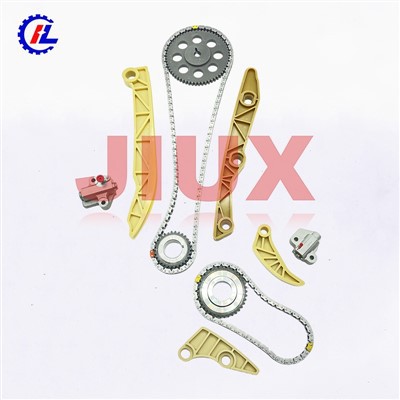
As a seasoned supplier in the timing chain industry, I’ve witnessed firsthand the critical role this component plays in an engine’s performance. One question that frequently arises among car owners and mechanics alike is whether a worn – out timing chain can increase fuel consumption. In this blog post, we’ll delve into the technical details, explore real – world implications, and discuss how you can identify and address this potential issue. Timing Chain
Understanding the Timing Chain’s Function
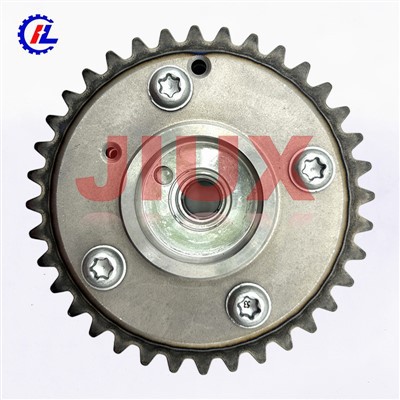
Before we can discuss the impact of a worn – out timing chain on fuel consumption, it’s essential to understand what a timing chain does. In an internal combustion engine, the timing chain is responsible for synchronizing the rotation of the crankshaft and the camshaft. The crankshaft converts the linear motion of the pistons into rotational motion, while the camshaft controls the opening and closing of the engine’s intake and exhaust valves.
The precise timing of these valve events is crucial for the engine’s operation. When the intake valves open at the right time, the engine can draw in the correct amount of air – fuel mixture. Similarly, when the exhaust valves open at the appropriate moment, the engine can expel the burned gases efficiently. A well – functioning timing chain ensures that these processes occur in perfect harmony, allowing the engine to run smoothly and efficiently.
How a Worn – Out Timing Chain Affects Engine Timing
Over time, the timing chain can become worn due to normal wear and tear, lack of proper lubrication, or high – mileage use. As the chain wears, it can stretch, causing the timing between the crankshaft and the camshaft to become misaligned. This misalignment can have several negative effects on engine performance.
One of the most significant consequences of a misaligned timing chain is a change in the valve timing. If the intake valves open too early or too late, the engine may not receive the optimal amount of air – fuel mixture. This can lead to incomplete combustion, where the fuel is not burned efficiently. Incomplete combustion not only reduces the engine’s power output but also results in an increase in fuel consumption.
The Relationship between Worn – Out Timing Chains and Fuel Consumption
Let’s take a closer look at why a worn – out timing chain can increase fuel consumption. When the valve timing is off, the engine’s internal combustion process is disrupted. For example, if the intake valves close too soon, the engine may not be able to draw in enough air – fuel mixture, causing a lean condition. In a lean condition, there is too much air relative to the amount of fuel, and the combustion process is less efficient. As a result, the engine may run rough, lose power, and consume more fuel in an attempt to maintain the desired performance.
Conversely, if the intake valves close too late, the engine may draw in an excessive amount of the air – fuel mixture, creating a rich condition. A rich condition means that there is too much fuel relative to the amount of air. While a rich mixture can sometimes provide more power, it is also wasteful because not all of the fuel is burned during the combustion process. The unburned fuel is then expelled through the exhaust system, leading to increased fuel consumption and higher emissions.
In addition to affecting the air – fuel mixture ratio, a misaligned timing chain can also impact the engine’s compression ratio. The compression ratio is the ratio of the volume of the combustion chamber when the piston is at the bottom of its stroke to the volume when the piston is at the top of its stroke. A proper compression ratio is essential for efficient combustion. When the timing chain is worn and the valve timing is off, the compression ratio may be altered, reducing the engine’s efficiency and increasing fuel consumption.
Real – World Examples and Case Studies
To illustrate the impact of a worn – out timing chain on fuel consumption, let’s consider a few real – world examples. In a study conducted by a leading automotive research firm, a group of vehicles with worn timing chains was tested against a control group of vehicles with new timing chains. The results showed that the vehicles with worn timing chains experienced an average increase in fuel consumption of up to 15%.
In another case, a mechanic reported on a customer’s vehicle that was experiencing poor fuel economy. After a thorough inspection, it was discovered that the timing chain was significantly worn and stretched. Once the timing chain was replaced, the vehicle’s fuel consumption returned to normal levels, and the customer noticed a significant improvement in performance.
Identifying a Worn – Out Timing Chain
So, how can you tell if your timing chain is worn? There are several signs that you can look out for. One of the most common symptoms of a worn – out timing chain is a rattling noise coming from the engine. This noise is often most noticeable when the engine is cold or at idle. The rattling sound is caused by the loose chain slapping against the engine components.
Another sign of a worn timing chain is poor engine performance. You may notice a decrease in power, acceleration, or overall drivability. The engine may also run rough or misfire, especially when under load. In some cases, the check engine light may come on, indicating a problem with the engine’s timing or other related systems.
If you suspect that your timing chain is worn, it’s important to have it inspected by a qualified mechanic as soon as possible. A mechanic can use specialized tools to check the chain’s tension and wear, as well as the alignment of the camshaft and crankshaft.
The Importance of Timely Replacement
Once a worn – out timing chain has been identified, it’s crucial to replace it as soon as possible. Ignoring a worn timing chain can lead to more serious engine problems, such as valve damage, piston damage, or even engine failure. In addition to preventing these costly repairs, replacing the timing chain can also improve your vehicle’s fuel efficiency, saving you money at the pump.
As a timing chain supplier, I understand the importance of providing high – quality products that meet or exceed industry standards. Our timing chains are made from premium materials and are designed to withstand the rigors of daily use. They are precision – engineered to ensure accurate timing and reliable performance, helping to keep your engine running smoothly and efficiently.
Conclusion
In conclusion, a worn – out timing chain can indeed increase fuel consumption. The misalignment of the camshaft and crankshaft caused by a worn chain disrupts the engine’s timing, leading to inefficient combustion and a subsequent increase in fuel use. By understanding the signs of a worn – out timing chain and replacing it in a timely manner, you can not only improve your vehicle’s fuel efficiency but also prevent more serious engine problems.
Fit for SUZUKI If you’re in the market for a high – quality timing chain, we’d love to talk to you. Our team of experts is ready to assist you in finding the right product for your specific needs. Whether you’re an auto repair shop, a parts distributor, or a DIY enthusiast, we can provide you with the support and products you require. Contact us to start a discussion about your timing chain requirements and let’s work together to keep your engines running at their best.
References
- Automotive Engine Design Handbook, Third Edition, by John Heywood
- Advanced Vehicle Technology and Alternative Fuels, Second Edition, by David Crolla
Huzhou Hongli Auto Parts Co., Ltd.
With abundant experience, we are one of the most professional timing chain manufacturers in China. Please rest assured to buy customized timing chain at competitive price from our factory. If you have any enquiry about cooperation, please feel free to email us.
Address: Building 16, No.50 / Building 18, No.58, Dadongwu, Lianshi Town, Nanxun District, Huzhou, Zhejiang, China
E-mail: jiux@timingkit.cn
WebSite: https://www.jiuxkit.com/
