Hey everyone, Shipbuilding Steel Plate
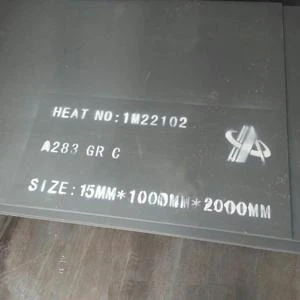
If you’re here scrolling because you’re looking at shipbuilding projects and wondering, “How long does it actually take to get the steel plates I need?”—you’re not the only one. I’ve been in the shipbuilding steel plate game for over 10 years now, and let me tell you, that question’s one I get at least 10 times a week. No, it’s not a one-size-fits-all answer, and if a supplier ever gives you a straight “4 weeks” or “12 weeks” without asking the basics? Run. But let’s break this down like we’re chatting over a coffee (I’ll skip the actual coffee cup clink, but you get the vibe).
First off, let’s cut through the noise. The delivery time for shipbuilding steel plates isn’t just some arbitrary number a supplier pulls out of thin air. It depends on way more than just “how many tons you order.” Let’s start with the biggest variable: the type of plate you need. Not all ship steel is the same, right? Like, you don’t use the same plate for the hull of a cargo ship as you do for the superstructure of a luxury yacht, or the ice-breaking bow of an Arctic research vessel.
For example, general hull steel—think milder grades like AH36 or DH36, which are super common for bulk carriers or container ships—those are usually the ones we keep in stock, right? Wait, not all of them, but if you’re ordering standard sizes and standard grades, that’s where it gets fast. If we have 5mm to 50mm thick AH36 plates in stock (which we usually do, for small to mid-sized orders), we can get that to you in 1 to 2 weeks. No fluff, just check our warehouse, load it on a truck, ship it out. But if you’re needing something more specific? That changes everything.
What if you need higher-strength grades, like EH36 for colder oceans, or even FH36 for super tough ice applications? Those aren’t sitting on our shelves because they’re ordered way more selectively. Those go through extra testing too—we’re not just selling you any old steel; ship classification societies (ABS, Lloyd’s Register, DNV, you know the ones) have to sign off on every batch. So for custom grades like that, that’s where the timeline jumps to 4 to 6 weeks. And if you’re needing something even more specialized—like corrosion-resistant steel for offshore ships, or ultra-thick plates for heavy-duty ship parts? We’re talking 8 to 12 weeks minimum. Sometimes longer if the mill has a backlog, which they do all the time, especially post-pandemic when supply chains were still catching up.
Next big thing: your order size and dimensions. I get it, a small repair for a fishing boat only needs 5 tons of 10mm plates—we can knock that out fast. But if you’re outfitting an entire new 10,000 TEU container ship and need 500 tons of 30mm plates in specific lengths? That’s a different story. Mills produce plates in standard widths (like 1.5m, 2m, up to 3.5m usually) and lengths, but if you need something cut to exact custom dimensions—like not just “10ft long” but “10ft 2in exactly” with specific edge prep for welding? That adds time. We have our own cutting and processing team, but if the mill has to produce the plates to your exact specs first, that adds another week or two. Also, if you need multiple different grades or thicknesses all at once? Coordinating that from our warehouse and getting them shipped together means we have to juggle a few orders, so that might add 3 to 5 days too.
Then there’s shipping and logistics, which a lot of first-time buyers forget about. Yeah, the plates have to get from our warehouse to your yard, but how far is “your yard”? If you’re in the same country as us, ground shipping is straightforward—maybe 1 to 3 days, depending on location. But if you’re ordering from overseas? Container shipping times fluctuate so much it’s not even funny. Pre-pandemic, it was 2 weeks from Asia to Europe; now it can be 4 to 8 weeks, or even longer if there’s a port backlog. And don’t get me started on shipping delays from weather or port strikes—we’ve had that happen twice in the last year, and it pushed out deliveries by 10 days each time. That’s out of our control, unfortunately, but it’s a real factor that affects the total delivery time.
Wait, also let’s talk about testing and certification, because that’s non-negotiable in this industry. Every batch of shipbuilding steel has to have a mill test report (MTR) that proves it meets all the classification society standards. Some customers think that’s just a piece of paper, but if you’re working with a major shipyard, they won’t accept a plate without that. For standard plates, the testing is pretty quick—2 to 3 days once the plates are produced. But for custom grades or special applications, we have to do extra tests, like impact testing at low temperatures or corrosion resistance tests, which adds another week to the timeline. And if the classification society does their own third-party inspection? That can add a few more days too, depending on their schedule.
I should also mention peak times, right? Like, shipbuilders usually have busy seasons—spring and early summer are huge because that’s when a lot of shipyards get their projects lined up for the year. During those peak months, mills get booked up 2 to 3 months in advance, so even if you order standard plates, you might be looking at 3 to 4 weeks instead of 1 to 2. Last year, we had a customer order AH36 plates in March, and they told us their order was delayed 3 weeks because the mill’s production line was full with a big commercial ship project. We tried to source from another reliable mill, but even their backlog was tight—so transparency is key here. We never promise a timeline we can’t keep, and if there’s going to be a delay, we tell you right away, not when you’re checking your tracking number.
Wait, let’s give some real examples to make this concrete, because numbers help. Let’s say:
- Small order, standard grade: 10 tons of 12mm DH36 plates, cut to 2m x 4m, local delivery to a repair yard. Timeline: 1 week total. That’s fast, and we do this all the time for small fishing boat repairs or local ship maintenance.
- Medium order, custom grade: 100 tons of 25mm EH36 plates, cut to 3m x 10m, shipped via truck to another state. Timeline: 5 weeks total. That includes mill production, testing, cutting, and shipping.
- Large order, specialized grade: 500 tons of 40mm FH36 ice-class plates, shipped internationally to a shipyard in Norway. Timeline: 10 to 12 weeks total. That accounts for mill lead time, third-party inspection, container shipping, and customs clearance.
Now, what can you do to make sure your delivery is as fast as possible? Let’s be practical. First, give us as much detail as you can upfront: exact grade, thickness, dimensions, quantity, delivery location, and your project deadline. If you can be flexible with exact dimensions (like if 2m x 4m works instead of a custom length) that can shave a week off. Also, order ahead if you can—don’t wait until the day you need the plates to contact us. If you’re working on a project, reach out 3 to 4 months in advance, even if you think you don’t need them yet. That way, we can lock in the mill’s production slot before they get booked.
And one thing I always tell new customers: don’t chase the absolute cheapest price if the timeline is way too good to be true. If someone says they can send you 500 tons of specialized ship steel in 2 weeks, that’s either not proper certified steel, or they’re cutting corners, or they’re lying. In this industry, good, compliant shipbuilding steel takes time to source and test. We’d rather be honest and say “it will take 6 weeks” than promise 3 weeks and deliver late with plates that don’t pass inspection.
A lot of people ask me, “Is there a way to get faster delivery?” The short answer is: yes, if you’re willing to adjust your requirements a little. Maybe use a standard grade instead of a custom one, or accept slightly standard dimensions, or pay for expedited shipping (though expedited shipping adds cost, obviously). We always present options—like, if a customer needs plates in 2 weeks, we can check our emergency stock of pre-tested, standard plates, even if it’s just a smaller quantity than they need. We’d rather meet you halfway than lose your business because another supplier made a better offer they couldn’t keep.
At the end of the day, the delivery time for shipbuilding steel plates is a balance between what you need and what we (and the mills, and the inspectors) can actually deliver. It’s not a game, and it’s not a guess—every timeline is built on actual factors that affect how steel is made, tested, and shipped. If you’re in the market for shipbuilding steel plates, the best thing you can do is reach out with your exact needs, and we’ll give you a realistic, transparent timeline—no fine print, no empty promises.

If you’re working on a shipbuilding project, big or small, and you want a straight answer on delivery times or pricing, feel free to reach out to discuss your specific requirements. We’re here to help you get the right plates, on time, so your project stays on track.
ASTM/ASME Corten Steel References
- International Association of Classification Societies. "Rules for the Manufacture, Testing and Certification of Shipbuilding Steel Plates." 2023.
- World Steel Association. "Lead Times for Specialized Steel Products, 2024 Update."
- United Nations Conference on Trade and Development. "Global Container Shipping Times Report, 2024."
Gnee Steel (Tianjin) Co., Ltd.
As one of the most professional shipbuilding steel plate manufacturers and suppliers in China, we also support customized service with low price. We warmly welcome you to buy high quality shipbuilding steel plate in stock here from our factory. If you have any enquiry about free sample, please feel free to email us.
Address: No.4-1114, Beichen Building, Beicang Town, Beichen District, Tianjin, China
E-mail: alloy@gneesteelgroup.com
WebSite: https://www.chinavesselplates.com/
