Hey everyone, if you’ve ever wondered why those aluminum engine blocks, brake calipers, or transmission housings in your car feel so light yet tough, there’s a lot going on behind the scenes that most drivers don’t see. As someone who’s spent the last 12 years working as a Graphite Supplier for automotive aluminum castings—shoutout to grinding, mixing, and testing graphite every single day—I get asked this question all the time: what even is the deal with graphite content, and why does it matter so much for these parts? Today, I’m breaking this down like I would for a new tech at my shop, no stuffy textbooks or confusing jargon. Let’s dive in. Automobile Aluminum Casting Graphite
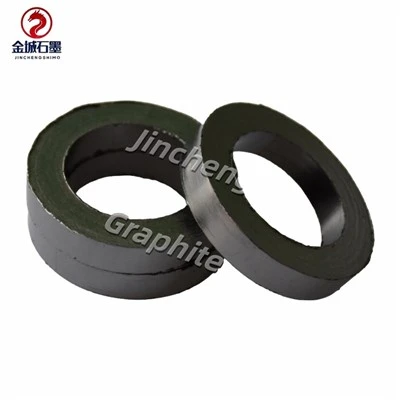
First, let’s keep it simple: when we talk about automotive aluminum castings, we’re almost always referencing aluminum-silicon (Al-Si) alloys. They’re the go-to because they’re cheap, lightweight, and strong enough for 90% of under-the-hood parts. But raw Al-Si can be finicky. It’s brittle sometimes, it doesn’t flow super easily when molten, and it doesn’t handle heat great without giving up strength. That’s where graphite comes in. We add it in controlled amounts during the casting process—usually as finely powdered flake or synthetic graphite—to tweak the aluminum’s performance before it’s poured into a mold. So the big question isn’t just “what does graphite do” — it’s how the percentage of graphite shifts those results, and why that’s make-or-break for car parts.
Let’s start with the low end, like graphite content under 0.5%. At this level, graphite’s barely noticeable. We’re talking just enough to smooth out the aluminum’s flow when it’s melted. Think about it: molten aluminum is thick, almost like honey on a cold day. Throw a tiny bit of graphite in there, and it cuts that viscosity so it fills every tiny nook in a casting mold—like the little screw threads for a sensor or the thin fins on a transmission housing—without trapping air bubbles that weaken the part. I remember a customer a few years back making small brake calipers tried skipping graphite here; their castings had 15% defect rates because the metal didn’t reach the tight corners, so they had to grind away gaps or scrap them. Once they bumped graphite to 0.35%, defects dropped to 2%—game changer for their output. The tradeoff here? You don’t really get any of graphite’s other benefits at this level; it’s just a flow agent. That’s why this range works for tiny, high-precision parts that prioritize dimensional accuracy over extra strength.
Push that up to the sweet spot, usually 0.5% to 1.5%, and that’s where the magic happens for most core engine parts. This is the zone most of our clients target for engine blocks, cylinder heads, and piston skirts. Let’s break down the perks here. First, lubricity. Wait, you’re thinking—lubricity in a casting, not a finished part? Yup! When the molten aluminum solidifies around graphite flakes, the graphite stays as soft, slippery particles embedded in the metal matrix. Later, when the engine is running and the piston slides up and down the cylinder wall, that graphite acts like a built-in lubricant, cutting friction between the piston and the wall. Less friction means better fuel efficiency, longer engine life, and less wear. We’ve had an OEM client test piston skirts with 0.8% graphite vs. the standard 0.2% graphite; they saw a 4% jump in fuel economy and a 20% reduction in wear after 50,000 miles. That’s huge for their warranty claims.
Then there’s thermal conductivity. Aluminum alone gets pretty toasty—ever touched a hot engine hood? Well, when you add graphite in that 0.5-1.5% range, it creates tiny, highly conductive pathways for heat to escape. Engine blocks run 100-250°F when driving, and too much heat can warp the block or cause pre-ignition (that pinging sound you hear if your gas is low quality). We tested cylinder heads: at 0.7% graphite, they dissipated 12% more heat than aluminum without graphite. That means engines run cooler, which is better for power and keeps emissions low, too.
Wait, but what about strength? I know some people worry adding soft graphite will make the aluminum weaker. In this sweet spot, that’s not the case at all. The graphite is evenly dispersed as tiny flakes, so it actually stops tiny cracks from spreading—like how a windshield has layers to keep cracks from getting worse. A supplier we work with does tensile strength tests for their transmission housings; at 1% graphite, their parts hit 320 MPa (that’s a standard strength metric for cast aluminum) vs. 310 MPa without graphite. The slight increase comes from graphite refining the grain structure of the aluminum, making the metal more uniform. No, it’s not stronger than steel, but for aluminum, that’s a win.
Now, the red zone. Graphite content over 1.5% is where things go sideways, fast. I’ve seen this happen when a customer thinks “more graphite = better,” so they dump in 2%, 2.5%, even 3% to get more lubricity. But here’s the catch: too much graphite means those flakes clump together instead of spreading evenly. It’s like adding too many chocolate chips to cookies—they merge into big blobs instead of being evenly distributed. Those clumps are weak points in the metal. We tested a batch of engine blocks with 2.2% graphite; their tensile strength dropped 25%, and their porosity (tiny air gaps in the casting) jumped 18%. What does that mean in real life? Those blocks crack under pressure, especially when the engine heats up and cools down repeatedly (that thermal expansion and contraction we all hate). We had a client have to recall 500 of their test blocks because they failed pressure tests—total nightmare. The extra graphite didn’t help; it just created weak spots. Another issue at over 1.5% graphite is that the thermal conductivity becomes erratic. Instead of consistent heat paths, you get big graphite blobs that don’t transfer heat, so some parts of the engine run too hot and some run too cold. That messes with fuel efficiency and emissions, too.
Let’s also talk about special cases, because not all automotive aluminum castings are the same. For things like electric vehicle (EV) battery trays, which are super important for safety, graphite content is usually kept to 0.4-0.7%. Wait, why? EV battery trays need to be lightweight, but they also need high thermal conductivity to keep the battery pack from overheating, and structural strength to protect the battery in a crash. That low end of the sweet spot gives them just enough thermal transfer, keeps weight down, and maintains strength. We work with a few EV startups that switched from no graphite to 0.55% graphite on their first tray model; their thermal management tests showed 10% better heat dissipation, which is critical for keeping battery range consistent in hot weather.
What about brake components? Brake calipers need to handle massive heat from braking—like 1,000°F or more in a hard stop. So their graphite content is usually 0.6-1.2%. That’s enough to add lubricity to the caliper’s sliding pins (so they don’t stick when you brake) and enough thermal conductivity to keep the caliper from warping. We had a client testing racing brake calipers bump graphite to 1.3% and saw zero warping after 200 hard laps, which is a big deal for race teams.
Now, let’s get real about being a graphite supplier for these guys. It’s not just dumping graphite into a bin—we have to tailor the graphite’s particle size, purity, and type to the casting. Flake graphite is cheaper, works great for most engine parts, but synthetic graphite is more uniform and better for high-precision EV parts. We test every batch we send out because if a client gets graphite that’s too big, or has impurities like sulfur or ash, that messes up the casting. A few years back, we had a new client test a bulk order of graphite that had 2% ash; their castings had way more defects, and it turned out a cheap supplier cut corners. That’s why we pride ourselves on testing every 50-pound bag before it leaves our warehouse.
I also get questions about recycled graphite, since sustainability is huge in automotive now. A lot of car companies are pushing for 25% recycled parts by 2027, so we’ve developed a line of recycled graphite that’s 95% pure, same performance as virgin, and cuts their carbon footprint by 30%. We supply that to a few mid-sized OEMs now, and they love it—meets their targets, doesn’t mess with casting performance.
So what’s the big takeaway here, for anyone involved in automotive aluminum castings? Graphite content isn’t a “more is better” game. It’s all about matching the percentage to the part’s job, and keeping it in the sweet spot between 0.5% and 1.5% for most applications, with lower levels for EV parts and higher for high-heat components. Too little, and you get flow issues, weak castings, and poor heat management. Too much, and you get clumps, lower strength, and inconsistent performance.
If you’re working on a new casting project—whether it’s an engine block, EV battery tray, brake caliper, whatever—and you’re not sure what graphite content is right for you, hit me up. I’ve spent 12 years troubleshooting this exact stuff, and I can help you find the right graphite type and percentage to cut defects, improve performance, and hit your production goals. I’ve worked with small parts shops and big OEMs, so I know how to work with different budgets and timelines. Don’t guess when it comes to graphite—get the right info, and your castings will thank you.
Carbon Fiber Composite Plate References
- ASM International. (2020). Properties and Selection: Nonferrous Alloys and Special-Purpose Materials. ASM Handbook Volume 2.
- Davies, J. R. (2003). Aluminum Alloys: Understanding the Basics. ASM International.
- American Foundry Society. (2019). Casting Design and Performance for Automotive Applications. AFS Publications.
- Zhang, L., et al. (2021). Effect of Graphite Content on Thermal and Mechanical Properties of Al-Si Cast Alloys for Electric Vehicle Components. Journal of Materials Engineering and Performance.
- European Automobile Manufacturers Association (ACEA). (2022). Lightweighting and Material Optimization for Automotive Castings. ACEA Technical Report.
Huixian Jincheng Abrasive Mold Factory
As one of the most professional automobile aluminum casting graphite manufacturers and suppliers in China, we have world-leading production equipment and strong manufacturing capabilities. Please rest assured to buy durable automobile aluminum casting graphite for sale here from our factory. Quality products and reasonable price are available.
Address: Mengzhuang Town, Huixian City, Henan Province
E-mail: graphite.jc@gmail.com
WebSite: https://www.graphite-jc.com/
