Hey guys, let’s cut to the chase: if you’re messing with LED lighting electronics and wondering if you can just throw ‘em in an electronic plastic enclosure? The short answer is 9 times out of 10, hell yeah—BUT it’s not a one-size-fits-all call. As someone who’s been supplying these enclosures for over a decade, I’ve seen so many folks skip the fine print and end up with dead LEDs, fire scares, or stuff that just doesn’t pass inspections. Today, I’m breaking down exactly what you need to know, no corporate jargon, just real talk that’s helped my customers go from “wait, will this work?” to “why didn’t I do this earlier?” Electronic Plastic Enclosure

First off, let’s get one thing straight: LED lighting is weirdly specific when it comes to enclosures. Unlike, say, a basic sensor or a remote that just needs to hold a circuit board, LEDs generate heat—even if people downplay it—and they interact with light, electricity, and the environment all at once. So when we’re talking electronic plastic enclosures (what I sell, fyi), the material itself is non-negotiable here. You can’t grab a cheap, flimsy poly bag from the hardware store and call it an enclosure—no way. The right plastic is the backbone here, and most of the good ones are thermoplastics rated for electrical use: things like ABS, polycarbonate (PC), or even modified nylon. Wait, but hold up—don’t mix up “food-safe plastic” with this. Food-safe BPA-free stuff doesn’t have the flame retardants or UL ratings you need for electronics. That’s a rookie mistake I see all the time.
Let’s dive into the big one: heat management. LEDs run cooler than incandescents, yeah, but they still push out 20-30% of their energy as heat (that’s a stat from the Lighting Research Center, by the way, not just my guess). If that heat gets trapped in a tiny enclosure, two things happen fast: the LED driver burns out, and the plastic itself starts to break down. Now, here’s where not all electronic plastic enclosures are created equal. My company’s enclosures have either vented slots (for warm indoor lights like kitchen under-cabinet LEDs) or heat-dissipating ribs built into the walls (great for outdoor spotlights where airflow is tight). I had a customer last year who tried a cheap no-name enclosure for his warehouse LED lights—no vents, just thin plastic— and after 6 months, half the LEDs died. He switched to my vented polycarbonate enclosures, and he’s had less than 1% failure rate since. The key here is thermal resistance: your plastic needs to have a high HDT (Heat Deflection Temperature) — aim for 100°C (212°F) minimum, otherwise the plastic will warp under sustained LED heat. Don’t just check the product description—ask for the HDT number, that’s non-negotiable.
Next up, electrical safety. LED drivers are low-voltage, but that doesn’t mean you can skip the enclosure insulation. The electronic plastic enclosure’s whole job here is to keep people from touching live parts and stop moisture from getting in (we’ll get to moisture next). But here’s a trick: not all plastics are non-conductive. Some cheap ones have tiny metal fillers that mess with conductivity, and even ABS can have additives that lower electrical resistance if it’s not graded. The right grade here is UL 94 V-0 rated— that means if the plastic catches fire, it self-extinguishes in under 10 seconds, no dripping. I can’t stress this enough. A buddy of mine had a customer’s outdoor LED string light catch fire because the enclosure was a cheap unrated plastic that melted, exposing the driver to wet grass. UL 94 V-0 is non-negotiable for any enclosure that’s going near electrical current. Also, if you’re dealing with high-wattage LEDs (like those 100W floodlights), you’ll want a thicker enclosure wall—minimum 2mm, not flimsy 1mm. Thicker plastic = better insulation = less chance of short circuits.
Now, the environment. Are your LEDs going inside, or outside? That’s make-or-break. If it’s indoor ambient lighting (like strip lights under shelves, or pendant lights in a hallway), you can go with a basic non-vented ABS enclosure—just make sure it’s dust-proof (IP20 or higher) so crumbs don’t get in. But if it’s outdoor LEDs: patio string lights, deck step lights, parking lot floodlights? You need IP65 rated enclosures. That means dust-tight and protected from low-pressure water jets. And not just any plastic for outdoor use—UV-stabilized polycarbonate. Regular polycarbonate will turn yellow and get brittle in 2 years of sun exposure. I had another customer who used my old (non-UV-stabilized) ABS enclosures for his outdoor gate LEDs—after 18 months, the plastic was so yellow you couldn’t see the LEDs through the enclosure at all, plus it cracked during a snowstorm. Switched to my UV-stabilized PC enclosures, and they’ve held up for 5 years now, still crystal clear. Also, if you’re in a super humid area (like Florida or Southeast Asia), go for enclosures with gasket seals—they’re just a thin rubber strip that fits between the lid and base, keeps moisture out. No gasket = condensation inside the enclosure = corroded driver = dead LEDs. That’s a $5 fix that saves you thousands in replacements, trust me.
Wait, what about if you’re modifying existing LEDs, not building from scratch? Like, adding an LED driver to a pre-made strip? Can you throw that in an electronic plastic enclosure? Absolutely—just make sure you account for the size. Don’t cram the driver into a too-small enclosure; leave at least 10-15% extra space for airflow. I’ve seen people stuff a 50mm driver into a 55mm enclosure, no room for air, and the driver overheats in a week. Also, make sure the holes for wiring are properly sealed—no gaps, or moisture will get in. If the enclosure doesn’t have pre-drilled wire glands, use silicone caulk to seal the gaps. Don’t use hot glue, it melts in heat and falls apart.
Now, the myths I hear all the time. Let’s debunk ‘em, ‘cause these will get you in trouble. First myth: “Plastic enclosures block LED light.” No, not if you pick the right plastic. Polycarbonate is optically clear (or you can get frosted to diffuse light if you want, no extra cost) and only blocks like 5% of light—barely noticeable. Glass blocks 10-15% and is way heavier, so plastic is better here. Second myth: “Metal enclosures are better for LED heat.” Yeah, metal conducts heat, but it’s also conductive. If you ground the metal right, that’s fine, but if you forget, you can get shocks. Plus metal rusts outdoors. Plastic is lighter, cheaper, corrosion-resistant, and doesn’t conduct electricity—way simpler for most small to medium LED jobs. Third myth: “Any electronic plastic enclosure is fine for LEDs.” No, if you buy the cheap stuff from random Amazon sellers that don’t list UL ratings or HDT, you’re rolling the dice. I’ve had customers come to me with enclosures from those guys that cracked after a month, melted in the heat, or weren’t UV-rated. Stick to suppliers who can send you test certificates—if they can’t, run.
Let’s talk about a real example, ‘cause numbers help. Last month, a customer from Texas reached out saying his outdoor LED floodlights kept dying every 3 months. He was using a $2 enclosure from a big box store—thinner than a CD, no vents, no UV rating. We switched him to my 3mm thick UV-stabilized polycarbonate enclosure with vents and a gasket. He’s had those floodlights for 8 months now, zero failures. The difference? We addressed the heat trapping, UV degradation, and moisture that were killing his LEDs. That’s the kind of fix that’s not about overpaying, it’s about picking the right enclosure.
Now, when would you NOT use an electronic plastic enclosure for LEDs? Rare, but let’s be honest. If you’re building a high-power LED that puts out over 200W, like a stadium light, plastic might not be enough—you’ll need metal with heat sinks. But for 99% of consumer and commercial LEDs (from 5W night lights to 100W floodlights), plastic is perfect. Also, if you need something ultra-compact (like a tiny LED indicator), plastic works just fine, no issues.
Wait, one last thing: installation tips that almost no one mentions. When you put the enclosure together, don’t tighten the screws too tight. Polycarbonate can crack if you over-torque the screws—use a screwdriver with a torque limiter, or just tighten until the gasket seals (no more). Also, if you’re using an enclosure with a gasket, test the seal before mounting it permanently. Spray a little water on the closed enclosure, wait 24 hours, and see if there’s condensation inside. If there is, the gasket’s not seated right. Super easy fix, but I see people skip it all the time.
At the end of the day, using an electronic plastic enclosure for LED lighting is not just possible—it’s the go-to choice for 90% of projects, as long as you pick the right one. The mistakes I see are always from cutting corners on material ratings, ignoring heat, or skipping environmental protection (like UV or gaskets). I’ve been in this game long enough to tell you: spend $10 on the right enclosure, instead of $2 on a cheap one that dies in 3 months, and you’ll save yourself so much hassle.
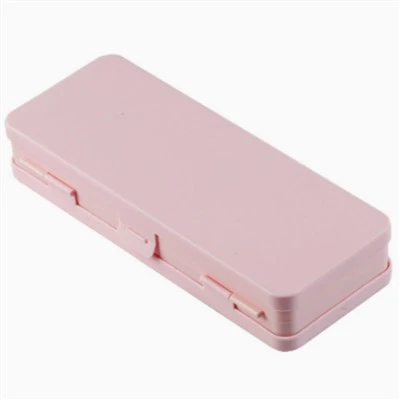
If you’re working on an LED project right now and have questions—whether it’s picking the right enclosure size, material, rating, or just want to make sure your setup is safe and long-lasting—hit me up for a one-on-one chat. No sales pitch, just real advice based on what’s actually worked for customers like you. Let’s make sure your LEDs don’t turn into a headache.
Plastic Stationery Parts References
Lighting Research Center. (2022). Thermal Characteristics of LED Lighting Systems. Rensselaer Polytechnic Institute.
Underwriters Laboratories. (2021). Standard for Safety for Plastic Materials for Electronic Enclosures (UL 94).
Polycarbonate Development Association. (2020). Outdoor Durability of UV-Stabilized Polycarbonate for Lighting Applications.
Yongkang Shunjiang Plastic Products Co., Ltd.
As one of the most professional electronic plastic enclosure manufacturers and suppliers in China, we offer a wide range of products with superior quality. Please feel free to wholesale bulk customized electronic plastic enclosure from our factory. Also, pricelist is available.
Address: Kangzhuang Road, Xicheng Subdistrict, Yongkang City, Zhejiang Province, China
E-mail: 15158911623@163.com
WebSite: https://www.shunjiangplas.com/
