When you’ve spent the last decade sourcing and distributing industrial fluid connection solutions, one question comes up more often than any other: “Why Guillemin coupling over the dozen other options out there?” I hear it from plant managers at food processing facilities, fuel haulers, and water treatment operators who’ve dealt with couplings that leak mid-transfer, take ten minutes to lock into place, or break after a dozen uses. It’s not just that I sell Guillemin couplings—it’s that I’ve tested the alternatives, seen the headaches they cause my customers, and can speak to the real, tangible differences that set Guillemin apart. Let’s break this down, side by side, so you can make a call that doesn’t end with a messy, costly shutdown. Guillemin Coupling

First, let’s ground this in what makes a coupling useful in the first place. For most industrial and commercial applications, couplings need three core things: a tight, consistent seal to prevent spillage; fast, tool-free connection to cut down on labor time; and durability to hold up to repeated use, tough environments, and the materials being transferred. Many couplings tick one or two of these boxes, but few nail all three as reliably as Guillemin. Let’s start with the competitor that most people default to when they think of quick couplings: the camlock coupling.
Camlock couplings—officially called cam and groove couplings—are ubiquitous for a reason: they’re simple, cheap, and work fine for light-duty, non-critical transfers. But let’s talk about their flaws, because those become glaringly obvious the second you move beyond a small farm or a occasional water transfer. First, their locking mechanism: two metal cams that flip over the groove to hold the coupling together. Those cams can wear out fast, especially if you’re coupling and uncoupling multiple times a day. I’ve had customers come to me after a season of using camlocks for fuel transfers, only to find that the springs inside the cam handles corroded from exposure to diesel or rain, so the cam wouldn’t lock fully. One customer in rural Texas told me he lost 50 gallons of heating oil last winter when a cam flipped open mid-delivery—no one had noticed until the pump shut off, and he was out hundreds of dollars in product, plus cleanup fees. That’s not a one-off; camlock’s design relies on small, exposed components that are vulnerable to damage, corrosion, and human error. Even when they do lock, their seal relies on a rubber gasket that sits between the two halves. Gaskets can shift, tear, or degrade over time, and if you’re transferring anything viscous—like molasses or hydraulic fluid—camlocks often struggle to create a uniform seal that doesn’t leak around the edges.
Now compare that to Guillemin’s design. Guillemin couplings use a lever locking mechanism that wraps around the outer edge of the coupling, not exposed on the sides. That lever is a single, solid piece, no small springs or cams to corrode. Locking it takes about two seconds: you align the two halves, squeeze the lever until it clicks, and that’s it. No fumbling with cams, no double-checking to make sure each cam is latched. I’ve tested this myself: when I’m loading a tanker with water for a local construction site, I can connect a Guillemin faster than I can grab a wrench to tighten a bolt on a camlock. And the seal? Guillemin uses a rubber or nitrile gasket that’s seated in a recessed groove inside the coupling, so it’s protected from damage. That means fewer leaks, even with heavy or viscous materials. For food and beverage customers, that recessed gasket is a big plus too: it’s easier to clean and sanitize after use, which is a non-negotiable for industries that have to meet FDA or food safety standards.
Next up: pipe thread couplings, the old standby that’s been around for over a century. These are the ones you screw together with Teflon tape or pipe dope, and they’re still used for low-pressure, fixed installations. But for any application where you need to disconnect and reconnect quickly, pipe thread couplings are a nightmare. Teflon tape can tear, dope can dry out, and if you over-tighten a pipe thread, you can crack the pipe or the coupling itself. I had a customer at a craft brewery who was using pipe thread couplings to transfer beer from tanks to kegs. He told me he spent an average of 20 minutes every other connection re-tightening the threads, because the vibration from the tank would loosen them, leading to small leaks that wasted batches of beer. That’s 20 minutes he could have spent cleaning lines or inspecting equipment, not fighting a coupling. Guillemin doesn’t require any tools at all, and the lock stays secure even with vibration. For that same brewery, switching to Guillemin cut connection time per keg by 80%, and he hasn’t had a leak in two years.
What about air couplings, like the quick-disconnect couplings used for pneumatic tools? Those are designed for low-pressure air, but they’re not built for fluid transfer at higher pressures. Air couplings have a poppet valve inside that opens when you connect them, which works fine for air, but for liquids, that valve can restrict flow and cause pressure drops. I’ve seen someone try to use an air coupling for a water transfer, and the flow rate was so slow it took twice as long to fill a tanker. Guillemin couplings have a full-flow design, meaning there’s no internal valve to restrict the transfer. That’s a huge difference for high-volume applications: if you’re pumping 1,000 gallons an hour, you want every drop to move through the coupling, not get stuck behind a small valve. Even at higher pressures—up to 250 PSI for many standard Guillemin models—they maintain that flow rate, whereas air couplings can’t handle more than 100 PSI without leaking or failing.
Another competitor that’s grown in popularity over the last few years: push-to-connect couplings. These are small, plastic or light-metal couplings used for things like plumbing or low-pressure air lines. On the surface, they look similar to Guillemin—tool-free connection, a locking ring—but they’re built for light duty, not industrial use. Push-to-connect couplings can only handle low pressure, and the plastic components break down quickly when exposed to chemicals, UV light, or extreme temperatures. I had a landscaping company try push-to-connect couplings for their water hoses, and after three months of leaving them out in the sun, the plastic locking ring cracked, so the coupling would come loose with just a little tug. Guillemin couplings are made from heavy-duty materials: ductile iron, stainless steel, or brass, depending on the application. That means they can handle temperatures from -40°F to 200°F, and exposure to chemicals like gasoline, fertilizer, or cleaning agents without corroding or breaking. For a construction team that leaves couplings outside year-round, that’s a game-changer—they don’t have to replace their couplings every six months.
Wait, but let’s talk about a common misconception: Guillemin couplings are too expensive. I know that’s a pushback I get all the time, from people who look at the upfront price and compare it to a cheap camlock. Let’s do the math, because it’s not close. A standard camlock might cost $5 each, but if it breaks after 10 uses, or leaks product every time you use it, that’s $50 for a set that lasts a week. A Guillemin coupling might cost $15 each, but it lasts 10 times longer—years, not weeks. Add up the cost of lost product, cleanup, and downtime when a cheap coupling fails: that far outweighs the slightly higher upfront cost. One of my fuel delivery customers in Florida did a cost analysis last year: he was using camlocks that cost him $1,200 a year in lost fuel and replacement parts. Swapping to Guillemin cost him $800 upfront, and his annual costs dropped to $150. That’s not a difference—it’s a return on investment.
I also want to address edge cases, because no two applications are the same. If you’re looking for a coupling for a very specific, niche use—like ultra-high-pressure hydraulic lines, or medical gas connections—Guillemin might not be the right fit. But for 90% of the applications I serve: food and beverage, fuel delivery, water transfer, agriculture, construction, waste management, Guillemin outperforms every other coupling on the market. Let’s talk about two specific use cases where this is clear: one in food processing, one in industrial cleaning.
A cheese manufacturer in Wisconsin used to use camlock couplings to transfer whey from their vats to storage tanks. Whey is high in protein and sticky, so it would build up in the crevices of camlock gaskets, leading to bacterial growth and frequent required deep cleans. The recessed gasket in Guillemin couplings means there’s nowhere for whey to get trapped, so they can wipe the coupling down in 30 seconds instead of taking it apart for a deep clean. That cut their cleaning time by 60%, and they passed their FDA audit on the first try after switching—something they’d struggled with for two years.
Another example: a municipal wastewater treatment plant. They needed couplings that could transfer sewage, a material that’s corrosive and hard on equipment. Their old pipe thread couplings would seize up every few months, requiring a crew to come out and use wrenches to break them free, which cost the city $2,000 a day in labor. Swapping to Guillemin couplings, which lock and unlock without tools, meant the crew could disconnect and reconnect in under a minute, even with gloves on, and the couplings didn’t corrode or seize from exposure to wastewater. That saved the city over $20,000 a year in labor costs alone.
Of course, no product is perfect. Guillemin couplings do have a couple of minor tradeoffs. If you’re working in extremely tight spaces, the lever locking mechanism can be a little bulkier than a camlock, so you have to make sure you have enough room to squeeze the lever. But for most industrial settings, where you’re working with large hoses and valves, that’s not a problem. They also come in a range of materials, so you have to pick the right one for your application: stainless steel for high-corrosion environments, brass for food-grade, ductile iron for heavy-duty. But that’s not a flaw—it’s flexibility, something cheap couplings don’t offer.
At the end of the day, the best coupling isn’t the one with the lowest price tag, or the one you’ve always used. It’s the one that keeps your operations running smoothly, doesn’t waste your product or your time, and stands up to the conditions you work in every day. I’ve been selling Guillemin couplings for 12 years, and I’ve turned down more than one sale because a cheap camlock was a bad fit for a customer’s needs. That’s why I do this: I don’t just sell a product, I solve problems.
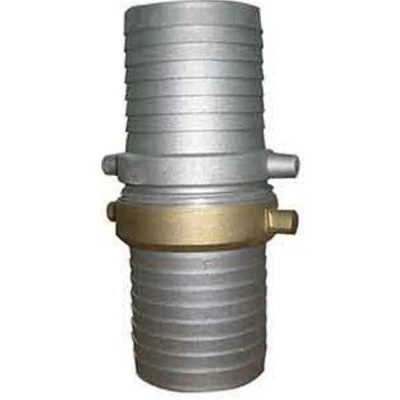
If you’re tired of dealing with leaky couplings, lost product, or downtime that eats into your profits, reach out to me to discuss your specific needs. We can talk about the right material, size, and configuration for your application, and I can put together a quote that shows you the real return on making the switch. Don’t wait for a coupling failure to cost you more than you’ll spend on a quality product today.
Bauer Coupling References
- Industrial Fluid Connections: A Guide to Coupling Performance and Selection, Fluid Power Journal, 2021
- Food and Beverage Sanitation Standards for Fluid Handling Equipment, FDA Food Safety Modernization Act (FSMA), 2022
- Corrosion Resistance of Industrial Coupling Materials, NACE International, 2020
- Operational Efficiency in Agricultural Fluid Transfer: Case Studies, American Society of Agricultural and Biological Engineers, 2021
- Pressure Ratings and Flow Characteristics of Quick Couplings, Hydraulic Institute, 2022
Suzhou Fuyikang Metal Industrial Co., Ltd.
As one of the most professional guillemin coupling manufacturers and suppliers in China, we have world-leading production equipment and strong manufacturing capabilities. We warmly welcome you to buy bulk high quality guillemin coupling for sale here from our factory.
Address: No.26.Mudong Rd,Mudu Town, Wuzhong Distric, Suzhou City,Jiangsu Province,China
E-mail: SZFYK@SZFUYIKANG-COUPLING.COM
WebSite: https://www.fyk-coupling.com/
