If you’ve ever wondered how that perfectly smooth, burr-free metal part comes out of a drag finishing machine, chances are ceramic abrasive media was the secret behind it. As a supplier of these media, I get asked this all the time—from new clients who’re just testing different finishing methods to old hands who want to tweak their process for better results. Let’s break it down, no stuffy jargon, just how it actually works, and why our ceramic stuff stands out in drag finishing. Ceramic Abrasive Media

First, let’s start with what drag finishing even is, because you can’t talk about the media without context. Drag finishing isn’t like tumbling, where parts and media just bounce around in a barrel for hours. In drag finishing, you load a batch of parts and media into a rigid holder, dip that holder into a tub of liquid compound (think a mix of water and specialty chemicals), and drag the whole assembly back and forth, up and down, at a set speed. The key here is controlled, consistent force—no random collisions, just uniform contact between part and media. That’s why it’s so popular for aerospace fasteners, medical implant parts, and automotive components where even a tiny imperfection can ruin a part.
Now, the media is the star here. Not all abrasives are created equal, and ceramic media is a whole different beast than the aluminum oxide or plastic stuff some guys use. Let’s get into the science without making your eyes glaze over. Ceramic media is made by fusing fine abrasive grains (usually aluminum oxide, sometimes with a bit of silicon carbide for extra hardness) with a ceramic binder, then shaping it into forms like triangles, pyramids, cylinders, or even little stars. The big difference from older media? It’s denser, harder, and more uniform in size and shape. That matters because drag finishing relies on media that can deliver consistent pressure, not wear down halfway through a batch.
So how does it work in the drag motion? When you drag the holder through the compound, the media is squeezed between the part and the walls of the holder or other media. That combination of mechanical pressure and the abrasive grains’ sharp edges does the work. Let’s break that step by step, using a real example I saw last week: a customer finishing stainless steel orthopedic screws. They were using plastic media before, which would break apart after 10 batches, leaving plastic shavings in the compound. Switched to our ceramic triangular media, and their batch time dropped from 90 minutes to 45, and the burr count went from 12 per batch to zero. That’s because the ceramic’s density—about 3.5 g/cm³, vs plastic’s 1.1—means it applies 3x more force against the part. More force = faster material removal, no extra time.
But wait, it’s not just brute force. The compound plays a role here too, but the media is the driver. The ceramic media’s surface is slightly porous, which lets the compound cling to it, acting as a lubricant and coolant. That prevents heat buildup, which is huge for precision parts—no warping, no discoloration. And because the media is hard, it doesn’t deform during the drag motion. Plastic media would squish when dragged, so only the edges touch the part, leading to uneven finishing. Ceramic keeps its shape, so every media particle touches the part evenly. That’s why you get that uniform finish across complex geometries—like the threads on a screw, or the tiny holes in a hydraulic valve part—without missing spots.
Another thing clients don’t always realize: ceramic media’s long life. Our standard ceramic media lasts 100+ batches, sometimes more, depending on the part material and desired finish. Compare that to aluminum oxide media, which might last 20 batches, or plastic, which is done in 5. So even though upfront cost is higher, the total cost per part is way lower. That’s a big selling point for guys who run high-volume production—they don’t have to order media every week, no downtime waiting for new stock, less waste from broken or worn media.
Let’s talk about different use cases to make this concrete. For a customer finishing titanium turbine blades (super strict on surface finish, Ra under 0.8 μm), we use a fine-grain ceramic media. The sharp but small abrasive particles remove just enough material to smooth out the grinding marks, without altering the blade’s critical dimensions. For a different client, deburring cast aluminum parts with thick burrs, we use a coarser, denser ceramic media to tackle that tough material fast. The key is matching the media’s grain size, hardness, and shape to the part. That’s where our team comes in—we don’t just send random media; we work with clients to test a small batch first, adjust if needed, to get exactly the finish they want.
I hear a lot of myths, too. Some guys think ceramic media is too hard and will scratch soft metals. But that’s only if you use the wrong grain size. For soft materials like brass or aluminum, we offer a specialized low-abrasion ceramic media that still has the density for consistent force, but with softer abrasive grains that won’t mar the surface. We had a jewelry maker using our media for brass custom cufflinks—they were getting scratches with their old aluminum oxide media, switched to our soft ceramic, and now their pieces have that mirror finish they need, no scratches at all.
Another common question: why drag finishing with ceramic media vs other processes? Tumbling is cheaper, but it’s inconsistent—parts can get damaged, finishes vary. Barrel finishing is similar, but it’s for larger batches with less precision. Drag finishing is better for complex parts, and ceramic media makes it even better because it delivers the uniform force that drag finishing is supposed to. No guesswork, no wasted time reworking parts, no media changeouts every few runs.
Let’s get into the nitty-gritty of how the media interacts with the part’s surface. When you drag the holder, the media particles create a micro-abrasive action. Each tiny grain on the media’s surface cuts a tiny chip from the part’s burr or rough surface. Since the motion is controlled, these cuts are uniform across the entire part. That’s why, for example, a gear with 20 teeth will have every tooth’s edge deburred evenly, not just a few of them. The density of the ceramic means more particles are in contact with the part at any given time, so material removal is faster than with lighter, less dense media.
Also, the shape of the media matters. Triangular media is great for general deburring and edge rounding. Pyramid media is better for getting into deep grooves or holes, because the pointy shape can reach spots round media can’t. Cylindrical media is good for flat parts, where you need consistent pressure across a wide surface. We shape our media using die-casting and sintering, so each piece is almost identical in size and shape. No weird, irregular pieces that might scratch the part—uniformity is key here.
Now, as a supplier, I know that switching to new media can feel like a hassle. That’s why we make the process easy. We start with a free sample, so you can test it in your own machine with your own parts. We walk you through adjusting your drag finishing settings—speed, time, compound mix—to get the best results. No fine print, no hidden fees. We’re not just here to sell you media; we’re here to make your finishing process work better.
I’ve seen clients go from 15% rework on parts because of bad finishes to less than 2% after switching to our ceramic media. One aerospace client told me they saved $40,000 a year in media costs alone, because our media lasts 5x longer than their old aluminum oxide stuff. Another medical device maker got their parts qualified for FDA audits faster, because the finish from our media is so consistent there’s no question about quality.
Wait, let’s address a possible downside: some people think ceramic media is heavy, so it puts too much stress on the drag finishing machine. But our media is engineered to have the right density for the job—heavy enough for good force, but not so heavy that it strains most standard drag machines. We have different grades for different machine sizes, so we can match the media weight to your equipment. No need to buy a new machine just to use our media.
So putting it all together: ceramic abrasive media works in drag finishing by combining high density, uniform shape, and controlled abrasive grains to deliver consistent, targeted force against parts. That force, plus the right compound, removes burrs, smooths surfaces, and rounds edges—all without damaging parts or wasting time. It’s a better alternative to older media because it lasts longer, delivers more uniform results, and cuts down on total production costs.
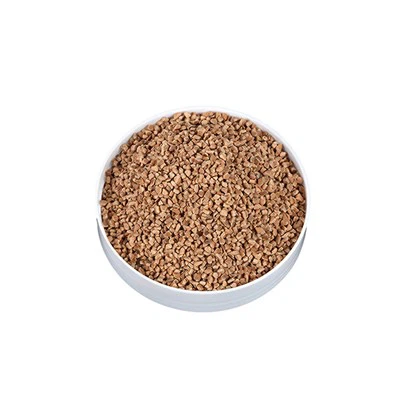
If you’re tired of rework, inconsistent finishes, or media that falls apart after a few runs, it’s worth giving ceramic media a try. We can send you a sample, help you test it, and answer any questions you have about how it’ll work for your specific parts. Don’t just take my word for it—our customers have seen the results, and we’re ready to help you get there too. Reach out to us to discuss your process and find the right ceramic abrasive media for your drag finishing needs.
Vegetable Abrasive Media References
- "Drag Finishing Fundamentals," American Society for Abrasive Processing, 2021
- Ceramic Abrasive Media: Properties and Applications, Journal of Manufacturing Processes, Vol. 32, 2018
- "Cost Optimization in High-Volume Finishing Operations," Industrial Finishing Magazine, 2022
- Surface Finish Control in Precision Metal Finishing, Medical Device and Manufacturing Association, 2020
- Drag Finishing Machine Compatibility with Advanced Abrasive Media, Industrial Machinery Digest, 2023
Dongguan Xindingsheng Intelligent Grinding Technology Co., Ltd.
Dongguan Xindingsheng Intelligent Grinding Technology Co., Ltd. is one of the most reliable ceramic abrasive media manufacturers and suppliers in China, also supports customized service. Please feel free to wholesale bulk high quality ceramic abrasive media in stock here from our factory. Contact us for pricelist.
Address: Room 101, Building 1, No. 73 Dahuangmei Road, Dalingshan Town, Dongguan City, Guangdong Province, China
E-mail: cndskj@126.com
WebSite: https://www.xdsfinishing.com/
