If you’ve ever stood next to a reverse osmosis (RO) membrane in action, whether it’s purifying tap water for a coffee shop or treating industrial process water, you might not notice how much its surface “feels” like it interacts with water. But as someone who’s spent the last decade refining low energy RO (LER) membranes for clients across food and beverage, pharmaceuticals, and municipal water treatment, I can tell you this: membrane hydrophilicity isn’t just a surface property—it’s the single biggest lever we have to cut operational costs, reduce fouling, and extend membrane life in our LER products. Let’s break down what that really means, and how it’s transformed the way we design and deliver LER membranes today. Low Energy RO Membrane

First, let’s get the basics straight. Hydrophilicity, in simple terms, is a material’s ability to attract and hold water. A hydrophilic surface “wets” easily, forming a thin, uniform water layer when submerged, while a hydrophobic surface repels water, causing it to bead up or pull away. For standard RO membranes, early designs relied on thin-film polyamide (PA) layers that leaned hydrophobic, which worked for salt rejection but required far more pressure to push water through. That’s where LER membranes came in: built to operate at 50–60% lower feed pressure than traditional high-pressure RO (HPRO) membranes, they promised to slash energy use by 30–50% for end users. But early LER designs had a problem: to cut pressure, we’d tweaked the PA layer to be thinner, which hurt its structural integrity, or swapped in materials that were too hydrophilic, leading to lower salt rejection. It took years of testing to nail down the sweet spot—and that sweet spot is all about balanced hydrophilicity.
Let’s start with the most direct impact: energy efficiency, the whole reason LER membranes exist. When a membrane’s surface is hydrophilic, that thin water layer I mentioned acts as a natural buffer against friction. Traditional hydrophobic RO membranes force water to squeeze through narrow gaps between the PA matrix and any foulants, and also demand higher pressure to overcome the repulsion between the membrane surface and water molecules. A 2022 study by the Water Research Foundation (WRF) found that increasing a membrane’s water contact angle (a standard metric for hydrophilicity: lower angle = more hydrophilic) from 72 degrees (moderately hydrophobic) to 42 degrees (moderately hydrophilic) reduced required operating pressure by 18% for similar salt rejection rates. For end users, that translates to lower electricity bills—especially for large-scale systems, where a 10% pressure cut can save thousands of dollars annually. That’s exactly why our team adjusts membrane surface chemistry: we use monomer additives in the PA layer that don’t weaken the membrane, but lower the contact angle just enough to keep water moving freely without sacrificing salt rejection.
Fouling is another make-or-break issue for LER membranes, and hydrophilicity changes how fouling behaves. Fouling is when organic matter (like humic acid from river water), particulates, or biological slime (biofouling) sticks to the membrane surface, which builds up over time, blocks pores, and forces operators to increase pressure or replace membranes early. On a hydrophobic surface, foulant molecules—many of which are also hydrophobic—bond strongly to the membrane, because “like attracts like.” A hydrophilic membrane, on the other hand, is already covered in water molecules, so hydrophobic foulants have a hard time sticking to the surface. They’re more likely to stay suspended in the feed water and get washed away during periodic flushing, rather than adhering to the membrane.
I’ll speak from experience here: three years ago, we had a municipal client treating surface water with our first-generation LER membrane. They were seeing a 12% pressure increase every 60 days due to organic fouling, which meant they had to add more chemicals to clean the membranes, erasing most of their energy savings. We tweaked the membrane’s hydrophilicity by adding a small amount of polyvinyl alcohol (PVA) to the PA coating—something we’d tested in our lab for six months. After switching, their fouling rate dropped to a 3% pressure increase every 180 days, and they cut cleaning chemical use by 45%. That’s not just a win for energy—it’s a win for downtime, labor, and maintenance costs, which are often 2–3 times the energy cost for membrane systems.
But here’s the catch: too much hydrophilicity can be just as bad as too little. If a membrane’s surface is overly hydrophilic, it absorbs so much water that it swells, which can widen the membrane’s pores. Wider pores mean more water passes through, but salt molecules follow, too—undermining the whole point of RO, which is to separate salt from water. Early attempts at super-hydrophilic LER membranes had salt rejection rates dropping from 99.5% to 97.2%, which was too low for desalination or high-purity water applications like pharmaceutical manufacturing. So our approach is targeted: we measure hydrophilicity at the nanoscale, not just the macro surface. We adjust the monomer ratio in the PA layer, and even add a thin, ultra-smooth hydrophilic coating that doesn’t swell, so we get the water flow benefits without the salt leakage.
Another underdiscussed impact is membrane lifespan. Hydrophilic membranes are less prone to damage from chlorine, which is common in feed water pretreatment. Wait—why? Because hydrophobic surfaces tend to have tiny, uneven defects in the PA layer, where chlorine can seep in and break down the polymer bonds. Hydrophilic surfaces are more uniform, with less sharp gaps where chlorine can penetrate. A 2021 study in the Journal of Membrane Science found that moderately hydrophilic LER membranes had 30% longer service life than hydrophobic LER membranes when exposed to low-level chlorine (0.5 mg/L) in feed water. For our clients, that means not buying new membranes every three years, but every four or five years—another big cost saving. Of course, we still recommend chlorine-resistant coatings for systems with higher chlorine levels, but the base hydrophilicity gives an extra layer of protection.
Now, let’s tie this back to what we do as a low energy RO membrane supplier. We don’t sell off-the-shelf membranes—we work with clients to tailor hydrophilicity to their specific feed water. A food and beverage client treating soft, low-particulate well water needs slightly less hydrophilicity than a municipal client treating turbid river water, because their fouling risk is lower. A pharmaceutical client needing ultra-high purity water (UHMW) needs a balance of hydrophilicity and salt rejection that ensures no contaminants pass through. We test each client’s feed water in our in-house lab, run pilot trials with different hydrophilicity levels, and then supply a membrane calibrated for their exact needs. That’s why our LER membranes deliver an average 35% energy reduction, vs. the 25% industry average for standard LER membranes.
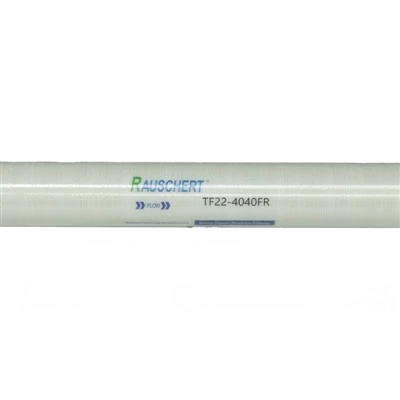
I get it—for someone who’s not a membrane engineer, terms like “contact angle” and “polyamide monomer ratios” can feel like jargon. But the bottom line is simple: a membrane that’s tuned to the right level of hydrophilicity saves you money on electricity, cuts downtime and cleaning costs, and lasts longer than a membrane that’s either too hydrophobic or too hydrophilic. The days of “one-size-fits-all” RO membranes are gone, and hydrophilicity is at the center of that shift. If you’re looking to upgrade your system to cut operational costs, or you’re struggling with fouling or high pressure in your current LER setup, we can help. Don’t guess at surface chemistry—partner with a team that’s spent years refining these properties, one membrane at a time.
Industrial RO System References
- Water Research Foundation. (2022). Hydrophilic Modification of Thin-Film Composite Membranes for Low-Pressure RO Applications. Project Report 3145.
- Journal of Membrane Science. (2021). Nanoscale Hydrophilicity and Chlorine Resistance in Polyamide RO Membranes. Volume 632, pages 119347.
- EPA Office of Water. (2020). Low-Energy Reverse Osmosis: Performance Metrics and Field Applications. U.S. Environmental Protection Agency Publication EPA 815-R-20-005.
- American Water Works Association. (2022). Fouling Mitigation in Low-Pressure RO Membranes: The Role of Surface Wettability. Journal AWWA, Volume 114, Issue 8, pages 42–51.
Fujian Huamo Technology Co., Ltd.
Fujian Huamo Technology Co., Ltd. is one of the most professional low energy ro membrane manufacturers and suppliers in China, featured by quality products and good service. Please rest assured to wholesale the best low energy ro membrane made in China here and get price list from our factory. Contact us for custom service and OEM service.
Address: No.6 Hengtong Rd, Shanmei Village, Xiamei Town, Nanan City, Fujian Province, China
E-mail: info@huaromembrane.com
WebSite: https://www.hmromembrane.com/
