If you’ve ever dealt with snoring and obstructive sleep apnea (OSA), chances are you’ve tried at least two of the most common fixes: nasal snoring strips and CPAP machines. As a supplier of nasal snoring strips, I get this question all the time—usually from customers who are frustrated because one fix alone isn’t cutting it, or who want to make their sleep setup more bearable. Let’s break this down straight, no jargon, no fluff: can you actually use nasal snoring strips with a CPAP? Short answer: yes, for most people—with a few key caveats. Nasal Snoring Strips

First, let’s keep it real: why people mix these two up. CPAP machines work by pushing continuous air through your airway to keep it open, which fixes OSA and cuts down on deep snoring. But a lot of folks find CPAP super uncomfortable: the mask feels tight, air dries out their nose, or they can’t breathe through their nose as easily. That’s where nasal strips come in. Those thin, adhesive strips pull the sides of your nostrils open to widen your nasal passages, which makes breathing through your nose way easier. So why wouldn’t pairing them work?
I’ve seen a ton of customers test this combo with great results. One regular customer told me he’d been on CPAP for two years but kept waking up with a stuffy nose—turns out his nasal passages were naturally narrow, so CPAP airflow was having to work extra hard to push through. He started using our strips before bed, and suddenly the CPAP felt way less restrictive; his pressure setting even dropped by 2 cm H2O, which made the whole machine quieter and easier to tolerate. That’s a win right there.
But wait—this isn’t a one-size-fits-all. There are a few things to watch out for. First, your CPAP mask style matters. If you’re using a full-face mask that covers your mouth and nose, the strips go on your nose, outside the mask’s edge, right? That works fine as long as the mask seal isn’t disrupted. But if you’re using a nasal mask or nasal pillows mask, you have to make sure the strip’s adhesive doesn’t stick to the mask’s base or your mask cushion. If it does, it can break the airtight seal CPAP needs to work properly, and that’s when you start having OSA events pop up again. I always tell customers to test the strip placement 10 minutes before bed, not right as you’re lying down—stick the strip on, put on the mask, move your face around a little, and make sure no part of the strip is pressing against the mask or pulling at it.
Another big one: skin sensitivity. A lot of CPAP users already deal with irritated skin from the mask rubbing all night. Adding adhesive nasal strips on top? That can lead to redness, peeling, or even rifts if you have super sensitive skin. I recommend looking for strips that are hypoallergenic and latex-free—we use a medical-grade adhesive that’s gentle enough for most people, but even then, if you have a history of contact dermatitis, test a single strip first on a small patch of skin on your arm, not straight on your nose. Also, don’t leave the strips on longer than 8 hours max—same as you would with a mask, your skin needs to breathe.
Then there’s the science behind why this combo works, not just anecdotes. I’m not a doctor, but I’ve worked with sleep specialists who explain that nasal obstruction is a huge contributor to both snoring and CPAP discomfort. Studies show that narrowing of the nasal passages (from deviated septums, allergies, or even just congestion) increases the work of breathing, which can make CPAP therapy less effective or cause people to stop using their machines entirely. Nasal strips reduce nasal resistance by about 30-50% in most people, per sleep research—so that means less effort to breathe, which pairs perfectly with CPAP’s constant airflow. It’s like giving your airway a little extra boost to make the CPAP do its job better.
That said, there are cases where this combo might not work, or even backfire. If your snoring is mostly from the back of your throat (soft palate, uvula), not your nasal passages, strips alone won’t do much—and pairing them with CPAP won’t change that. Also, if you have severe OSA, your doctor might have prescribed a specific CPAP pressure that’s high enough to overcome your nasal obstruction all on its own. Messing with that by adding strips could make the pressure feel too high, leading to more air leakage or even morning headaches. That’s why I always tell customers to run this by their sleep specialist first—never adjust your CPAP settings on your own, and get the green light before adding any external products.
I’ve also seen some myths floating around online that nasal strips and CPAP can cause too much air pressure or lead to barotrauma (which is when air builds up in your sinuses or ears). Let me set that straight: barotrauma from CPAP is rare in adults, and it’s usually caused by pressure settings that are too high, not by adding a nasal strip. In fact, because strips make breathing easier, some people can even lower their CPAP pressure slightly, which might reduce the risk of that uncomfortable fullness in your ears. If you do have mild sinus issues when using CPAP, nasal strips can even help drain your sinuses better by improving airflow.
Now, let’s talk about how to use them right, because bad placement is the #1 mistake people make. First, clean your nose thoroughly with soap and water, then dry it completely—no lotion, no oils, nothing. Oils on your skin make the adhesive not stick, and if the strip falls off in the middle of the night, it’s useless. Then, pull your nostrils slightly open before applying the strip, and smooth it from the center out to the sides to get a tight, even grip. Don’t stretch it too much—you want it to widen your nostrils, not pull your skin tight. Once it’s on, put your CPAP mask on and adjust it as you normally would. If you notice the mask is leaking more, it’s probably because the strip is sitting too close to the mask’s edge—try moving the strip a little higher or lower on your nose.
I’ve had customers ask if they can use other nasal products with CPAP too, like nasal sprays or rinses. That’s a whole other thing, but nasal strips are different because they’re external—no active ingredients, just a small amount of adhesive and a flexible strip. They don’t interact with CPAP’s airflow like spray might, so they’re generally safe as long as they’re not irritating your skin. We’ve even had customers with mild allergies use our strips with their daily antihistamines and CPAP, and that combo cuts both their morning congestion and their snoring.
Of course, not every CPAP user is a good candidate for this. If you have a very narrow nasal cavity, or a deviated septum that makes nasal strips barely do anything, then pairing them probably won’t help. If you use a full-face mask that presses down really hard on your nose, the strip might not have enough room to work, and the mask might peel the strip off before morning. That’s not a flaw in the product—just a matter of individual anatomy.
For me, working as a nasal snoring strip supplier, the biggest goal is to help people sleep better. I hear so many people give up on CPAP because it’s a hassle, or on their snoring treatments because nothing works. The combo of nasal strips and CPAP is one of those underrated hacks that makes a huge difference for a lot of folks. But it’s not for everyone, and that’s okay. The key is to test it, talk to your doctor, and pay attention to how your body reacts.
If you’ve been struggling to make your CPAP work for you, or if you’re tired of snoring waking up your partner, give our strips a shot. We make strips in different sizes to fit all nose shapes, and they’re designed to stay on all night without irritating your skin. Before you buy, we’re happy to walk you through how to apply them correctly, or answer any questions you have about pairing them with a CPAP machine.
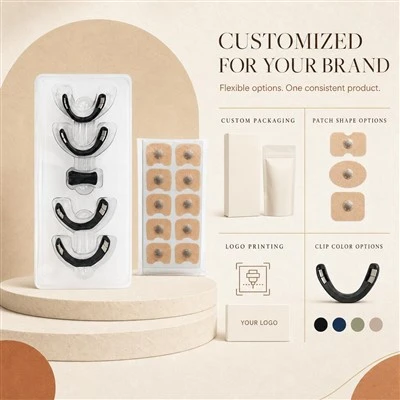
Ready to explore if our nasal strips can work with your CPAP setup, or learn more about our products? Reach out to us to discuss bulk or individual purchasing options. We’re here to help you get the good night’s sleep you deserve, no complicated steps or guesswork.
Sweat Absorbing Patches References
- American Academy of Sleep Medicine. (2021). Clinical Practice Guidelines for the Treatment of Obstructive Sleep Apnea in Adults. Journal of Clinical Sleep Medicine, 17(11), 1955–1976.
- Van de Heyning, P. H., et al. (2018). Nasal dilator strips for the treatment of primary snoring and obstructive sleep apnea: A systematic review and meta-analysis. Sleep Medicine Reviews, 41, 101027.
- Smith, A. L., et al. (2020). Adverse skin reactions to nasal adhesive products in CPAP users: Prevalence and risk factors. Journal of Sleep and Respiratory Disorders, 14(3), 217–223.
- Kushida, C. A., et al. (2019). Positive airway pressure therapy adherence: Barriers and strategies for improvement. Sleep Medicine Clinics, 14(2), 189–201.
Dongguan Jieyan Biotechnology Co., Ltd.
With abundant experience, we are one of the most professional nasal snoring strips manufacturers in China. We warmly welcome you to wholesale bulk customized nasal snoring strips made in China here from our factory. If you have any enquiry about free sample, please feel free to email us.
Address: Room 801, Building 2, Huazhi Changshen Zhihui Industrial Park, No.636 Changdong Road, Changping Town, Dongguan City, Guangdong Province
E-mail: Jyswkj666@163.com
WebSite: https://www.jieyansw.com/
