Hey there, if you’re in the market for melamine doors (whether you’re a contractor, interior designer, or a homeowner fixing up their space), you’ve probably found yourself Googling “what’s the standard size?” at 2 a.m. after a late-night renovation scroll. As a melamine door supplier, I get it—nothing’s more of a headache than ordering doors that don’t fit your existing frames, wasting time and cash on returns that nobody wants. Let me break this down straight, no fancy jargon, just the real stuff we deal with every day at the shop. Melamine Door
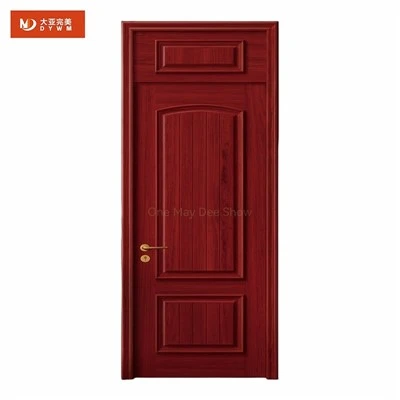
First off, let’s get one thing clear: there’s no single “one-size-fits-all” magic number that works for every project. But when we’re talking about standard sizes—like the ones builders, home centers, and most contractors rely on for new construction or standard room remodels—there are a few key numbers that pop up over and over. Let’s start with residential interior doors, since that’s what most people are looking for day-to-day. For bedrooms, living rooms, and even hallways in US homes, the standard height is 80 inches (that’s 6 feet 8 inches, for those who think in feet instead of inches). That’s non-negotiable for most new builds; if you’re replacing a door in a house built in the last 30 years, it’s almost certainly 80 inches tall. The width here? The workhorse is 32 inches. Wait, yeah—32 inches is the go-to for most interior bedrooms and hall doors. But don’t sleep on 30 inches either, especially for smaller closets or older homes where hallways are narrower. For bathrooms, that’s usually a little tighter too—24 or 28 inches are standard, since bathroom frames are often sized smaller to save space.
Now, what about exterior doors? Those are a whole different ballgame, because they have to handle weather and code stuff, too. Standard exterior front doors in the US are usually 80 inches tall too, but the width jumps up to 36 inches for most homes. Some older homes might have 32-inch exterior doors, but those are less common now because 36 inches is ADA-adjacent (we’ll get to ADA in a sec, since that’s a big one for commercial spaces too). Back doors, the ones that lead to patios or garages, are often 80 inches tall and either 30, 32, or 36 inches wide—depends on the garage size or the patio access you’re going for.
Let’s shift to commercial spaces, because we supply a lot of doors for offices, retail shops, and small businesses too. Here, standards aren’t just about convenience—they’re about code. ADA requirements are non-negotiable for most commercial buildings, right? ADA specifies that accessible doors (the ones that have to be usable by people with disabilities) can’t be narrower than 32 inches when open, but the actual door slab standard we stock is usually 36 inches wide by 80 inches tall. That’s because 36 inches gives a little wiggle room for hardware like push bars, which are required for commercial spaces. Also, if you’re dealing with warehouse doors or heavy-use commercial entry doors, you might see 84 inches tall as a standard too—for spaces where people are carrying tall items like furniture or boxes.
Wait a second, you might be thinking—what if my frame is a weird size? A lot of people don’t realize that when we talk about door sizes, we’re referring to the “slab” size, not the frame. The slab is just the door itself, no hinges or hardware. The frame is the thing that fits around it, so you always want to order a slab that’s ½ inch smaller in width and height than your frame. For example, if you have a 32-inch wide frame, a standard slab is 31 ½ inches wide—That gap is for shims and to make installation way easier, so you don’t have to hack at the slab to make it fit. We see this mistake all the time: someone orders a 32-inch slab for a 32-inch frame, and then they’re stuck trying to sand down the edges, which is a pain. Pro tip from our team: always double-check your frame size before ordering, not just your old door’s slab size.
Now, let’s talk about why these standards exist. It’s not just some made-up rule to annoy people. Back in the day, every builder had their own size, which meant suppliers had to stock a million different door sizes, which drove up costs for everyone. Standardizing sizes started in the 1950s (yeah, really!) to make construction faster, cheaper, and more consistent. Melamine doors are especially big on standard sizing too, because they’re pre-manufactured—we press the melamine coating onto MDF or wood core in bulk, so running a standard size is way more efficient, which means we can pass the savings on to you. That’s why you won’t find a 31-inch wide melamine slab on our regular stock list—we stick to the standards that move fast for both you and us.
But wait, what if you need a non-standard size? We get calls all the time from people who have old homes, tiny closets, or custom-built spaces that don’t fit the standard numbers. Here’s the good news: most melamine door suppliers (including us) can do custom sizes, no problem. Just send over your frame measurements, and we can cut the slab to whatever width or height you need—within reason, of course. We can’t make a door wider than 48 inches or taller than 96 inches for residential use, because that’s the max size our presses can handle. For commercial, it’s a little bigger, but still, you don’t want a door so big it’s hard to install anyway.
Let me throw out some common examples to make this less abstract. If you’re renovating a 3-bed house built in 1995, you’ll probably have three interior bedrooms: two 32-inch wide, one 28-inch (for a kid’s room or a small office). The bathroom door is 24 inches, the front door is 36 inches wide by 80 inches tall. If you’re a contractor building a new strip mall, your retail spaces will have 36-inch wide interior doors, 36-inch wide exterior entry doors, and storage doors that are 32 inches wide, all 80 or 84 inches tall. That’s the stuff we ship out every week.
One thing people often mix up: door thickness. Yeah, size isn’t just width and height. Most standard interior melamine doors are 1 3/8 inches thick, while exterior doors are 1 ¾ inches thick. That thickness is also a standard, so if you’re replacing an exterior door, you can’t just grab any 80-inch tall door—it has to be 1 ¾ inches thick to fit the exterior frame and handle the weather. Interior doors are thinner because they don’t need as much insulation or soundproofing, though if you’re doing a home theater or a nursery, you might want a thicker door, which we also stock as a custom option.
Let’s talk about mistakes we’ve seen customers make, because that’s how you avoid headaches. Last month, a guy called us panicking because he ordered a 32-inch slab for his bedroom, and it was too narrow because his frame was actually 33 inches wide (he measured the old door, not the frame, which is wrong). Another time, a small business owner ordered a 32-inch exterior door for his coffee shop, which didn’t meet ADA code, so he had to reorder and lost a week of business. That’s why measuring the frame, not the old slab, and checking code for commercial spaces is so important.
Also, melamine doors are super versatile, right? You can get them in plain white, oak, walnut, whatever finish you want, and the size still applies across all finishes. A standard white melamine door is the same size as a standard walnut melamine door—only the coating changes, the slab dimensions stay the same. That’s another reason standards matter: it doesn’t matter what look you’re going for, the size is consistent, so you can mix and match finishes without worrying about fitting issues.
Now, if you’re still not sure what size you need, here’s what to do. First, pull off your old door (be gentle, it’s heavy) and measure the slab’s width and height, but also measure the frame’s rough opening. The rough opening is the space in the wall where the frame goes, so that’s the most accurate number— it’s usually 2 inches wider and 2 inches taller than the door slab. So if your rough opening is 34 inches wide by 82 inches tall, your slab should be 32 inches wide by 80 inches tall. If that’s a standard size, we can ship it out same-day (well, next business day, but you get the idea) for delivery in a few days. If you have an odd rough opening, just send us the numbers, and our team will hook you up with a custom cut slab, no extra hassle.
As a supplier, we care about this stuff because we don’t want you to be stuck with a door that doesn’t fit. We’ve had customers come to us after ordering from a big-box store that sent a non-standard melamine door, and they had to wait 2 weeks for a replacement. That’s why we keep all the standard sizes in stock at our warehouse, so when you order, you get it fast, and it fits right the first time.
If you’re a contractor, bulk orderer, or just someone who needs a door for a standard frame, the easiest way is to give us a shout. We can walk you through measuring, confirm the size you need, and even send over a sample of the melamine finish if you want to see it in person. No salesy nonsense, just straightforward answers and doors that fit.
Wait, let’s recap to make sure you’ve got the key points down: Standard interior residential doors are 80” H x 32” W, 80” H x 30” W for closets, 80” H x 24/28” W for bathrooms. Standard exterior residential doors are 80” H x 36” W. Commercial standard is usually 80” H x 36” W (ADA-compliant, push-bar ready). Slab size is ½” smaller than your frame. Custom sizes are available if you need something weird. And don’t mix up slab size and frame size—measure the frame, not the old door.
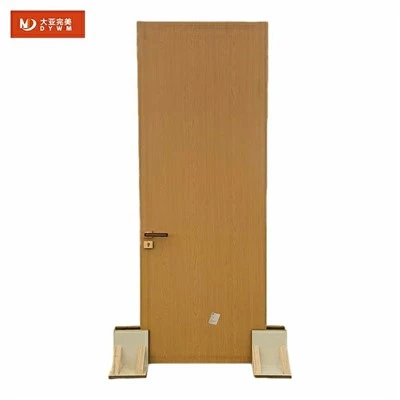
If you’re ready to order, or just have questions about sizing, finishes, or delivery, hit us up. We’re here to help you get the right door, no guesswork, no wasted time. Don’t let a wrong size door derail your project—we’ve got the standard sizes in stock, and we can custom cut whatever you need.
Melamine Door References:
- National Association of Home Builders. (2022). Residential Door Size Standards.
- International Code Council. (2021). Commercial Door Requirements & ADA Standards.
- Door and Hardware Institute. (2023). Standard Slab Door Dimensions for Interior and Exterior Applications.
One May Dee Show Furniture Co., Ltd.
As one of the most professional melamine door manufacturers and suppliers in China, we are committed to providing high quality customized service with competitive price. Welcome to wholesale bulk cheap melamine door made in China here from our factory. If you have any enquiry about quotation, please feel free to email us.
Address: Laomiao Village, Dacheng Town, Sanyuan County, Xianyang City, Shaanxi Province, China.
E-mail: trade@omdoor.com
WebSite: https://www.dywmdoor.com/
