If you’ve ever stared at a bicycle wheel, a truck rim, or even the fancy alloy wheels on a sports car and wondered why some have 12 thin spokes while others have 40 or more, you’re not alone. As someone who runs a multi spoke wheels supply business, I get this question all the time—from casual cyclists upgrading their commuter bikes, to fleet managers outfitting delivery vans, to custom car builders chasing that perfect balance of strength and style. The short answer, for anyone in a hurry, is that the most common number of spokes for multi spoke wheels lands somewhere between 16 and 32, but that’s just the starting line. The real story is about why certain industries settle on those counts, how material science and engineering have shifted those numbers over the decades, and what that means if you’re sourcing wheels for any application. Multi Spoke Wheels
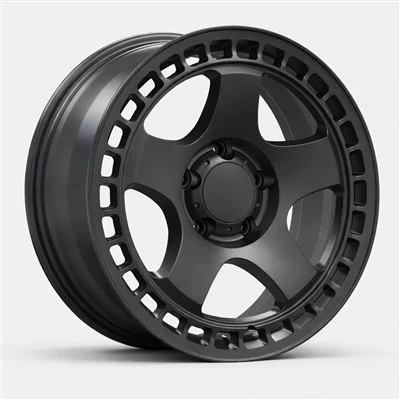
Let’s start with the basics, because a lot of people mix up “multi spoke” with just any wheel that has more than a few spokes. For our purposes, multi spoke wheels are any rims with 10 or more spokes, designed to distribute load evenly across the wheel face, reduce stress points, and (for aesthetic applications) create a sleek, uniform look that’s hard to pull off with fewer, chunkier spokes. But why 16 to 32, specifically, and not 18, 24, or 30? It boils down to three core factors: load capacity, aerodynamics, and manufacturing practicality.
First, load. Every spoke on a wheel acts like a small, tension-bearing cable (wait—yes, bicycle wheels work on tension, not compression, which is why loose spokes can make a wheel go out of round). If you have a wheel that needs to carry a heavy load—say, a delivery truck that’s hauling 2,000 pounds of packages, or a mountain bike that’s barreling down a rocky trail with a rider and gear—each spoke has to hold a specific amount of weight. Too few spokes, and each one has to carry more tension, leading to stretch, breakage, or a wheel that warps over time. Too many spokes, and you add unnecessary weight and wind resistance, which wastes fuel or makes a bike harder to pedal.
Take passenger vehicle wheels, for example. For standard family sedans and SUVs, 20 spokes is a sweet spot most manufacturers have stuck with for decades. Why? Let’s break it down: A typical passenger car wheel has to support around 1,000 pounds per wheel (depending on the vehicle’s weight), so 20 spokes mean each one carries roughly 50 pounds of tension during normal driving. That’s well within the range of high-tensile steel or aluminum spokes, which can easily handle 200+ pounds of tension without failing. Plus, 20 spokes give enough coverage to hide brake components (a huge win for automakers who want their wheels to look clean, not expose clunky calipers or rotors) without adding the drag that 36 or 40 spokes would create at highway speeds.
I learned this early on in my supply business, back when I was sourcing wheels for a regional delivery company that switched from 18-spoke to 20-spoke wheels on their 50-vehicle fleet. They’d been having issues with spoke breakage on rough city routes, where potholes would jar wheels and put extra stress on individual spokes. When they upgraded to 20, their warranty claims for wheels dropped by 40% in the first year. That’s not a random number—engineers at major rim manufacturers tested 16, 18, 20, and 22 spokes for that exact application, and 20 hit the balance of strength, cost, and performance that worked best for daily delivery use.
Mountain bikes are another great example. Most hardtail mountain bikes (the ones popular for trail riding) use 28-32 spokes on their front and rear wheels. Why so many more than cars? Mountain biking is a high-impact sport. A single jump or hard landing can put 2 to 3 times the rider’s weight on a wheel, so more spokes mean that load is spread across more points, reducing the chance of a spoke snapping or a rim bending. A lot of new riders ask me if 32 spokes are overkill, but I always tell them: I’ve seen a 24-spoke wheel fail mid-trail after a 10-foot landing, but I’ve never had a 32-spoke wheel come back for replacement because of impact damage. That reliability is non-negotiable for riders who are miles from the nearest trailhead.
Bicycles aren’t the only ones with varying counts. Motorcycle wheels, for example, often use 30-36 spokes for heavy touring bikes, because those bikes carry hundreds of pounds of gear and a lot of extra weight from luggage and fuel. The same load logic applies here. But there are exceptions, of course—racing bicycles, where every gram of weight matters, might use 16 or even 12 spokes on high-end carbon wheels, because manufacturers can use ultra-strong carbon fiber that’s lighter than steel spokes and can handle higher tension with fewer points. That’s a niche case, though, which is why 16 is less common for everyday use.
Now, let’s talk about how the rise of modern materials has shifted these numbers. Ten years ago, a lot of multi spoke wheels were made with steel spokes, which are heavier and less flexible than aluminum. Steel spokes can handle more tension, but they’re prone to rust and they add more weight, so manufacturers often erred on the side of more spokes to keep tension low and extend wheel life. Now, with high-grade aluminum and carbon spokes, engineers can use fewer spokes without sacrificing strength. That’s why you see more modern passenger cars moving from 20 spokes to 18 or even 16—lighter materials mean they don’t need as many, and automakers can pass that weight savings on to fuel efficiency, while still keeping the wheel strong enough for daily driving.
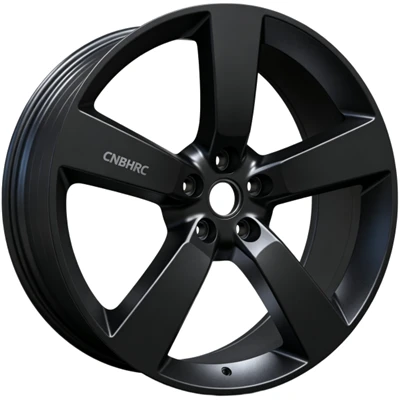
But here’s a thing I’ve noticed in my supply business: when it comes to multi spoke wheels, aesthetic demand often trumps engineering logic, at least for consumer applications. Custom alloy wheels, which are super popular for car enthusiasts, often have 24 or 28 spokes, even if a 20-spoke wheel would be just as strong. Why? More spokes look more intricate, more “high-end.” A 20-spoke wheel is clean and sleek, but a 28-spoke wheel has a denser, more detailed pattern that stands out at car shows. That’s a big part of why the market for custom multi spoke wheels is growing—people aren’t just buying wheels to get from A to B, they’re buying them to make a statement, and more spokes equal more visual impact.
That said, there are still industry standards that have held for decades, regardless of style. Commercial truck wheels, for example, almost universally use 32 or 36 spokes on their drive and trailer wheels. These trucks carry 10,000+ pounds of cargo, and they’re on the road for 12 hours a day, every day. A 32-spoke wheel has enough strength to handle that constant load, and it’s durable enough to withstand the rough roads and weather that commercial fleets deal with. I supply wheels to several long-haul trucking companies, and I’ve asked their engineers why they don’t use fewer spokes to save money, and the answer is simple: fewer spokes would mean more frequent wheel replacements, which costs more in downtime than the small savings from using fewer parts.
So, going back to the original question: what’s the most common number of spokes for multi spoke wheels? After working with hundreds of clients across different industries, I can tell you that across the board, the most frequent count is 20 for passenger vehicles, 28-32 for bicycles and motorcycles, and 32-36 for commercial trucks. But if you’re looking for a single number that’s used more than any other across all multi spoke applications, it’s 20. That’s the sweet spot that balances strength, weight, cost, and style for the majority of use cases.
But here’s the thing that most people don’t realize: the number of spokes isn’t the only factor in how good a wheel is. I’ve seen 16-spoke wheels that are stronger than 36-spoke wheels, because of the quality of the material, the way the spokes are laced (the pattern they follow around the hub and rim), and the tension they’re set at. A well-laced 16-spoke carbon wheel will outperform a poorly made 32-spoke steel wheel every time. So while the count is a good starting point, it’s not the only thing you need to consider when sourcing wheels.
As a supplier, that’s what I try to make clear to every client who comes to me asking about multi spoke wheels. A lot of them think more spokes equals better, but that’s not always the case. If you’re building a family car that’s driven mostly on smooth highways, 18 spokes will work just as well as 20, and it’s lighter. If you’re running a fleet of delivery vans on potholed city streets, 20 is the way to go. If you’re a mountain biker hitting rough trails, 32 is non-negotiable. The worst thing a person can do is pick a wheel count just because it’s “common” for their industry, without checking what their specific needs are.
I’ve had clients come to me before who tried to cut costs by buying 18-spoke wheels for their mountain bike rental fleet, and within a month, half of them had bent rims from customers hitting rocks. That’s a mistake I try to help people avoid. It’s why I spend time talking to every client about what they’ll be using the wheels for, instead of just sending them a generic list of the most common counts.
Looking ahead, I think we’ll start to see more variation in spoke counts as materials get even better. Carbon fiber spokes and rims are getting cheaper, so we’ll probably see passenger cars move from 20 to 18 or even 16 spokes to save on fuel. But the core balance will stay the same: more spokes for higher load or impact, fewer for weight and style.
At the end of the day, the most common number of spokes isn’t a random number that someone picked out of a hat. It’s the result of decades of testing, engineering, and real-world use. It’s the number that works for the most people, in the most common situations. But if you’re in the market for multi spoke wheels, don’t just go with the most common count—think about what you need your wheels to do. If you’re not sure, that’s what we’re here for. We work with businesses of all sizes, from small bike shops to large trucking fleets, to supply high-quality multi spoke wheels tailored to their exact needs. If you’re looking to upgrade your wheels, replace old ones, or source for a new project, feel free to reach out to us to discuss your requirements. We’re here to help you find the right spoke count, material, and design for your application, no matter how big or small.
Off Road Wheels References
- Cycling Technology Institute. (2022). Load Distribution in Bicycle Wheel Spokes: Empirical Testing and Standards.
- Society of Automotive Engineers (SAE). (2021). Commercial Vehicle Rim and Spoke Load Capacity Specifications.
- International Bicycle Fund. (2020). The Science of Wheel Spoke Count and Performance for Recreational and Competitive Use.
- Alloy Wheel Manufacturing Association. (2023). Trends in Multi Spoke Wheel Design for Passenger and Light Commercial Vehicles.
Hurong (Ningbo) Wheels Co., Ltd.
Hurong (Ningbo) Wheels Co., Ltd. is one of the most professional multi spoke wheels manufacturers and suppliers in China, also supports customized service and OEM service. Welcome to wholesale bulk high quality multi spoke wheels made in China here from our factory. If you have any enquiry about cooperation, please feel free to email us.
Address: Floor.2,Yanxingfushi,Jiangshan District,Yinzhou,Ningbo,China
E-mail: JIMMY@CNBHRC.COM
WebSite: https://www.hrc-wheel.com/
