Hey there! As a supplier of measuring machines, I often get asked about how these nifty devices measure angles. It’s a pretty cool topic, and I’m stoked to break it down for you. Measuring Machine
First off, let’s talk about why measuring angles is such a big deal. In a whole bunch of industries, from manufacturing to construction, getting the right angle is crucial. Whether you’re building a bridge, making a precision part for a car, or even setting up a telescope, accurate angle measurements can make or break the project.
So, how do our measuring machines do it? Well, there are a few different methods, and I’ll go through the most common ones.
The Good Old Mechanical Way
One of the oldest and simplest ways to measure angles is through mechanical means. Picture a protractor, but on a much more advanced and precise scale. Our mechanical measuring machines use gears, levers, and other moving parts to determine the angle.
For example, some of our machines have a rotating arm. When you place the machine on the object whose angle you want to measure, the arm moves along with the surface. The movement of the arm is then translated into an angle reading through a series of gears. It’s like a big, complicated clockwork mechanism.
The advantage of mechanical measuring machines is that they’re pretty straightforward and don’t rely on electricity. They’re also very durable and can withstand harsh environments. However, they might not be as accurate as some of the newer digital methods, especially when it comes to very small angles.
Optical Magic
Optical measuring machines are another popular option. These machines use light to measure angles. One common technique is the use of lasers.
Our laser-based measuring machines work by sending a laser beam onto the object. The beam reflects off the surface and is detected by a sensor. By analyzing the angle of the reflected beam, the machine can calculate the angle of the object.
This method is super accurate, especially for small angles. It’s also non-contact, which means you don’t have to touch the object being measured. This is great for delicate or sensitive materials. However, optical measuring machines can be a bit more expensive and require a clean, stable environment to work properly.
Digital Delight
In today’s digital age, most of our measuring machines are digital. These machines use sensors and microprocessors to measure angles.
One type of digital sensor we use is the accelerometer. An accelerometer can detect changes in acceleration, which can be used to determine the angle of an object. For example, if you tilt an object, the accelerometer can sense the change in acceleration due to gravity and calculate the angle of the tilt.
Another common digital sensor is the gyroscope. A gyroscope measures the rate of rotation of an object. By integrating the rate of rotation over time, the machine can determine the angle of the object.
Digital measuring machines are highly accurate and can provide real-time measurements. They’re also very versatile and can be easily programmed to measure different types of angles. However, they do require a power source and can be more complex to operate than mechanical or optical machines.
Calibration: The Key to Accuracy
No matter which method our measuring machines use, calibration is essential. Calibration is the process of adjusting the machine to ensure that it’s providing accurate measurements.
We calibrate our machines using a set of known standards. For example, we might use a precision angle block with a known angle. We place the block on the measuring machine and compare the machine’s reading to the known angle. If there’s a difference, we adjust the machine until it provides an accurate reading.
Calibration should be done regularly to ensure that the machine remains accurate over time. We recommend calibrating our measuring machines at least once a year, but more frequent calibration might be necessary depending on the usage and environment.
Applications Galore
Our measuring machines are used in a wide range of applications. In the manufacturing industry, they’re used to ensure that parts are made to the correct specifications. For example, in the automotive industry, our machines are used to measure the angles of engine components, ensuring that they fit together perfectly.
In the construction industry, our machines are used to measure the angles of buildings, bridges, and other structures. This helps ensure that the structures are stable and safe.
In the aerospace industry, our machines are used to measure the angles of aircraft components, ensuring that they meet the strict safety and performance requirements.
Choosing the Right Machine
When it comes to choosing the right measuring machine for your needs, there are a few things to consider. First, you need to think about the accuracy you require. If you need very precise measurements, a digital or optical machine might be the best choice.
You also need to consider the environment in which the machine will be used. If the environment is dirty or harsh, a mechanical machine might be more suitable.
Finally, you need to think about your budget. Digital and optical machines tend to be more expensive than mechanical machines, but they also offer higher accuracy and more features.
Wrapping Up
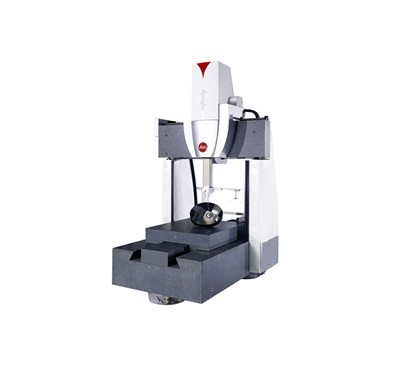
So, there you have it! That’s how our measuring machines measure angles. Whether it’s through mechanical, optical, or digital means, our machines are designed to provide accurate and reliable angle measurements.
Measuring Machine If you’re in the market for a measuring machine, or if you have any questions about our products, don’t hesitate to reach out. We’re here to help you find the right machine for your needs.
References
- "Measurement Technology Handbook" by John G. Webster
- "Optical Metrology" by Douglas C. O’Shea
- "Digital Signal Processing: Principles, Algorithms, and Applications" by John G. Proakis and Dimitris G. Manolakis
Hermens Industrial Co., Ltd.
As one of the most professional measuring machine enterprises in China, we’re featured by quality products and low price. Please rest assured to buy cheap measuring machine in stock here and get quotation from our factory. We also accept customized orders.
Address: 9/59 Moo 14, Rachathewa , Bang Phli , Samut Prakan Province 10540
E-mail: liu_jincheng@hzhemen.com
WebSite: https://www.hermensindustrial.com/
