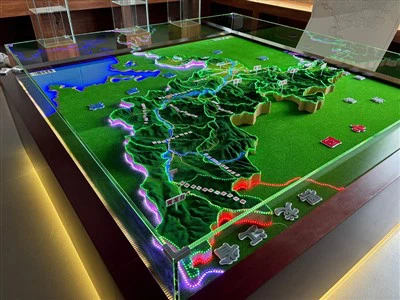
Hey there! I’m a supplier of industrial models. Over the years, I’ve seen firsthand how these nifty little things can really shake up the product optimization game. So, I thought I’d take a few minutes to chat about how industrial models contribute to making products better. Industrial Model
Visualizing the Concept
One of the biggest perks of industrial models is that they let you see your product idea in the flesh, or at least in a physical form. When you’re just working with blueprints or 3D digital renderings, it can be hard to really grasp the scale, shape, and overall look of the product. But with a physical model, you can hold it in your hands, turn it around, and get a real sense of what it’s going to be like.
For example, let’s say you’re designing a new smartphone. You can use an industrial model to see how it feels in your hand, how easy it is to reach the buttons, and how the different components fit together. This kind of hands – on experience is invaluable because it allows you to catch any design flaws early on. Maybe the phone is a bit too thick, or the camera bump is in an awkward position. By spotting these issues with a model, you can make the necessary adjustments before you start mass – producing the product, which saves a ton of time and money in the long run.
Testing and Validation
Industrial models aren’t just for show; they’re also great tools for testing. You can use them to simulate real – world conditions and see how the product will perform. For instance, if you’re making a new car engine, you can build a scale model to test its airflow, combustion efficiency, and heat dissipation.
You can also use models to test the durability of a product. Let’s say you’re designing a piece of outdoor furniture. You can subject the model to different weather conditions, like rain, sun, and wind, to see how it holds up. This helps you identify weak points in the design and make improvements. Maybe the joints start to loosen after a few days of exposure to moisture, or the material starts to fade in the sun. By addressing these issues with the model, you can ensure that the final product is more reliable and long – lasting.
Communication and Collaboration
In a product development process, there are usually a lot of people involved, from designers and engineers to marketers and clients. Industrial models can act as a common language that everyone can understand. They make it easier to communicate ideas and get feedback from different stakeholders.
For example, when you’re presenting a new product concept to a client, it’s much more effective to show them a physical model than just talking about it. The client can see the product’s features and benefits right in front of them, which makes it easier for them to give you their input. They might say, "I really like the shape of this, but I think the color could be different." This kind of feedback is much more specific and actionable than vague comments based on a digital image.
Models also help with collaboration between different teams. In a large product development project, engineers and designers often work closely together. A physical model can be used as a reference point for both teams, ensuring that everyone is on the same page. It can help them to identify any potential conflicts between the design and the engineering requirements early on, so they can work together to find a solution.
Customization and Personalization
Industrial models allow for a high degree of customization. You can easily modify the model to test different design options or to meet the specific needs of a client. For example, if you’re designing a piece of medical equipment, you can quickly change the shape, size, or functionality of the model to see which version works best.
This flexibility is a huge advantage in today’s market, where consumers are looking for products that are tailored to their individual needs. You can use industrial models to create personalized products that stand out from the competition. Let’s say you’re in the business of making custom jewelry. You can use models to show your clients different design options before you create the final piece. This ensures that the client gets exactly what they want and that you can deliver a product that meets their high expectations.
Cost – Effective Design Iteration
Product optimization often involves a lot of trial and error. You come up with an initial design, test it, make changes, and then test it again. This process can be very expensive if you’re working with full – scale prototypes. However, industrial models offer a more cost – effective alternative.
Scale models are usually much cheaper to produce than full – size prototypes. You can make multiple models with different design variations and test them without breaking the bank. This allows you to explore a wide range of design options and find the best one for your product. Once you’ve finalized the design using the models, you can then move on to creating a full – scale prototype for more in – depth testing.
Market Research and Feedback
Industrial models can also play a crucial role in market research. You can use them to gauge consumer interest in a new product. For example, you can set up a booth at a trade show and display your product model. You can then talk to potential customers, ask for their feedback, and see how they interact with the model.
This kind of real – world feedback is priceless. It can help you understand what consumers like and don’t like about your product. Maybe they think the packaging is too complicated, or they would prefer a different color scheme. By incorporating this feedback into your product design, you can increase the chances of your product being successful in the market.
Conclusion

In conclusion, industrial models are an essential tool for product optimization. They help with visualizing the concept, testing and validating the design, communicating and collaborating with stakeholders, customizing the product, iterating the design cost – effectively, and gathering market feedback.
Scale Model If you’re working on a product development project and need high – quality industrial models to take your product to the next level, I’d love to chat. I’ve got the experience and the know – how to create models that will help you optimize your product design. So, don’t hesitate to reach out and let’s start the conversation about how we can work together to make your product the best it can be!
References
- Grove, D. Product Design Handbook: A Guide to Optimized Design Methods.
- Ulrich, K. T., & Eppinger, S. D. Product Design and Development.
Guangzhou Zonco Culture and Media Co., Ltd.
Guangzhou Zonco Culture and Media Co., Ltd. is one of the most reliable industrial model manufacturers and suppliers in China, also supports customized service with low price. We warmly welcome you to wholesale cheap industrial model from our factory. For quotation, contact us now.
Address: Room C371, 402, Building 6, No.3 Xintang Street, Tianhe District, Guangzhou
E-mail: 13123180052@163.com
WebSite: https://www.scalemodellab.com/
