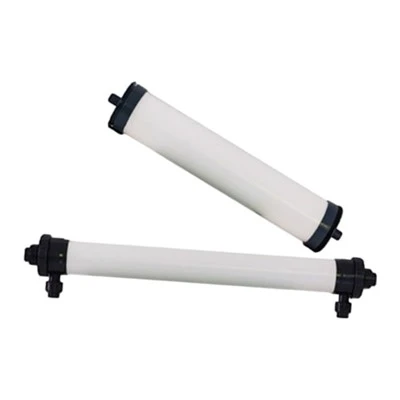
If you’re reading this, chances are you’re either in the water treatment game and already know what a high temperature EDI (Electrodeionization) module does, or you’re new and trying to figure out why everyone’s hyping these things for processes that need pure water (think pharma, power, or food and beverage) but hate the hassle of replacing modules every year. Let me cut to the chase: I’m a supplier of high temperature EDI modules, and I’ve spent way too many late nights troubleshooting modules that our customers thought were “broken” because they didn’t know how to care for them right. Most people assume these modules are just plug-and-play, but that’s not true—especially when you’re running them at higher temps (usually 40°C to 60°C, which is where these modules actually shine, vs standard EDI’s 25°C max). Get the care wrong, and you’re shelling out for replacements way sooner than you should. Get it right, and you’ll easily get 3 to 5 years out of a module—maybe even longer. Let’s break this down like we’re grabbing coffee and chatting shop, no stuffy jargon that makes your eyes glaze over. High Temperature EDI Module
First off, let’s talk about the big one: feed water quality. This is the foundation of everything. I can’t tell you how many times a customer calls me panicking because their module’s current is spiking, only to check their pre-treatment and find out their cartridge filter has been clogged for 2 weeks, or their reverse osmosis (RO) unit is slinging 2ppm of silica into the feed. Wait, silica? Yeah, that’s a silent killer for high temp EDI. At higher temperatures, silica is more soluble, so it doesn’t precipitate as easily in RO, which means it slips right into the EDI module and builds up on the ion exchange resins. Resins are the heart of the EDI—they grab charged ions to purify water. If silica coats those resins like a thin film, they can’t do their job anymore. Same goes for heavy metals, even tiny amounts. Copper, iron, manganese—those are catalytic poisons that break down the resin matrix over time, especially when you’re running at elevated temps. Don’t skimp on pre-treatment. I always tell customers: if your pre-treatment isn’t at least as good as the RO you’re using, you’re wasting money on a high temp EDI. Test your feed water regularly—weekly at minimum, more if your source (like well water or river water) is inconsistent. Pay special attention to silica, total organic carbon (TOC), and heavy metal levels. We even have a quick pre-check guide we send to all our new customers that lists the exact limits for our modules, no fine print. Stick to those, and you’ll already be ahead of 70% of the problems we see.
Next up, temperature control. This is non-negotiable. High temp EDI modules are built to handle up to 60°C, but that doesn’t mean you crank the heat as high as it’ll go just to save time. Wait, why? A little background: higher temps make water less viscous, so ions move faster through the resins, which is why EDI works better at higher temps. But if you go over 60°C, two things happen. First, the ion exchange resins start to degrade. The polymer matrix they’re made of breaks down, and you get leachables in your product water—bad news for pharma or food grade applications. Second, the membrane materials in the module (the cation and anion exchange membranes that separate the concentrate and dilute streams) get brittle. We’ve had a customer who ran their module at 65°C for 3 months—when they took it apart, the membranes were cracking like old pottery, and the resins were turning brown. On the flip side, don’t run the module at way lower than its rated temp. If it’s rated for 50°C, don’t run it at 30°C unless you have to. Low temps slow down ion movement, so the module has to work harder to maintain resistance, which puts extra stress on the electrodes and the resins. What’s the sweet spot? Most of our customers run at 45°C to 55°C—that’s where we’ve seen the best balance of performance and longevity. Also, keep temp fluctuations minimal. If your feed water temp jumps 10 degrees in a day, that shocks the module. Use a temperature controller, not just a generic heater, to keep it steady to within ±2°C.
Then there’s the issue of operating parameters—current, pressure, flow rates. These aren’t set-it-and-forget-it numbers, even if the manual says so. Wait, let’s start with current. EDI uses a direct current (DC) to push ions through the membranes and resins. For high temp modules, the rated current is usually a bit higher than standard EDI, but if you run it too high, you get something called “water splitting” that’s too intense. That generates excess heat, which we already know is bad, and it also can burn out the resin beads. Too low, and you don’t get enough ion removal, which leads to fouling. The key here is to monitor the module’s resistance. If the product water resistance drops, don’t just crank up the current—check why first. Is the feed water fouled? Is the temp off? As for pressure, the dilute stream pressure should be slightly higher than the concentrate and electrode streams. Why? To prevent cross-contamination. If concentrate pressure is higher, the briny, ion-laden water leaks into the dilute stream, messing up purity and putting extra stress on the membranes. I tell customers to keep dilute pressure 5 to 10 psi higher than concentrate. Flow rates? Don’t run too low. If the flow through the module is too slow, the sediment and foulants that get past pre-treatment settle on the membranes and resins, building up a layer that’s hard to remove. Run too high, and you put unnecessary pressure on the module’s O-rings and manifolds, leading to leaks. Stick to the flow rate range in your module’s manual, and adjust it slightly if you’re seeing minor fouling—enough flow to keep things flushed, not enough to beat the module up.
Now, cleaning and regeneration. A lot of customers think high temp EDI modules don’t need cleaning because they run hot, but that’s a myth. Fouling still happens—just maybe slower. The good news is that high temp makes cleaning more effective, because chemicals work better at higher temps (within reason, don’t use caustic at 60°C). The mistake people make here is using the wrong cleaner. For organic fouling (which is super common from TOC or bacteria), use a citric acid or phosphoric acid solution—something mild, not hydrochloric acid, which is too harsh on the resins and membranes. For inorganic fouling like silica or calcium carbonate, a dilute caustic solution (1% to 2% sodium hydroxide) at 40°C to 45°C works great. But here’s the rule: never clean the module too often, and never use a cleaner that’s not designed for EDI modules. We’ve had a customer use a generic industrial cleaner once and ended up with a module that had 20% lower purity after that. Also, when you do clean it, follow the steps exactly—don’t just dump the cleaner in and walk away. Recirculate the cleaner through the module for 1 to 2 hours, then flush thoroughly with clean water. And don’t forget the electrode stream— that needs to be cleaned too, because it can get buildup from the electrolyte solution. If you do that every 6 months, or whenever you see a drop in performance, you’ll keep fouling at bay.
Wait, what about downtime? If you’re going to shut down the module for more than a few days, don’t just leave it full of water. Stagnant water breeds bacteria, which causes organic fouling. Flush the module with clean, low TOC water, then drain it completely, or fill it with a preservative solution (like 0.5% sodium metabisulfite) if you’re storing it for longer than a week. Don’t use bleach as a preservative— that’s corrosive to the membranes. Another downtime tip: when you start the module back up after storage, do it slowly. Cranking up the current and pressure all at once can damage the electrodes. Ramp up current over an hour or so, check the product water resistance, and make sure all pressures are balanced before you put it back online.
Oh, and one last thing—regular maintenance checks. Don’t wait for the module to fail to take it apart. Every 12 months, take a quick peek at the module’s manifolds and seals. Check for leaks, make sure the O-rings are in good shape (no cracks or tears), and test the electrode connections to make sure they’re not corroded. Corroded connections cause uneven current distribution, which wears out parts of the module faster than others. We even recommend that customers keep a spare set of O-rings on hand, because replacing a leaky O-ring is way cheaper than replacing a whole module.

I know this sounds like a lot, but trust me, it’s all stuff you can build into your regular maintenance routine, and it saves you thousands of dollars in replacement costs. At the end of the day, high temperature EDI modules are a big investment, so you want to get every last mile out of them. If you’re not sure about your current set-up, or you need specific guidance for your application, our team is here to walk you through it. Whether you’re a pharma plant needing pure water for injectables, a power plant needing boiler feed water, or a food and beverage facility for beverage production, we can help you optimize your module’s performance and extend its life. Reach out to our team to talk through your needs, no sales pitch pressure—just real advice from people who work with these modules every single day.
EDI Module References
- Water Treatment Principles and Design, 2nd Edition, M. Davis and D. Cornwell, John Wiley & Sons, 2008.
- Electrodeionization: Principles, Design, and Applications, K. Li, CRC Press, 2015.
- "Optimizing High-Temperature Electrodeionization for Industrial Pure Water Production", Journal of Membrane Science, Vol. 562, 2018, pp. 112-120.
- Practical Guide to Electrodeionization Systems, W. Oswald, AWWA Press, 2020.
Fujian Huamo Technology Co., Ltd.
Fujian Huamo Technology Co., Ltd. is one of the most professional high temperature edi module manufacturers and suppliers in China, featured by quality products and good service. Please rest assured to wholesale the best high temperature edi module made in China here and get price list from our factory. Contact us for custom service and OEM service.
Address: No.6 Hengtong Rd, Shanmei Village, Xiamei Town, Nanan City, Fujian Province, China
E-mail: info@huaromembrane.com
WebSite: https://www.hmromembrane.com/
