Hey folks, if you’re here because you’ve been side-eyeing your vacuum switch tester for a while, wondering if it actually needs calibration like every other lab or shop tool you own—you’re in the right spot. Let me cut to the chase: as a vacuum switch tester supplier, I talk to electricians, industrial maintenance leads, substation techs, and even small factory owners about this every single week. Most people I chat with skip calibration because they think, “It’s just a switch tester, right? I use it every day, I know what it does.” Spoiler: that’s a fast track to a problem you don’t want. Vacuum Switch Tester

First, let’s get on the same page about what a vacuum switch tester actually does, because a lot of folks mix this up with other electrical testers. Vacuum switch testers aren’t your standard voltage meters—they measure two super critical things for high-voltage vacuum switches: how well the vacuum inside the switch bottle is holding up (that’s the dielectric strength, basically if there’s enough empty space to prevent electricity from arcing where it shouldn’t) and how the switch performs when you click it on and off—called contact resistance and operational timing. These switches live in substations, industrial power panels, and heavy machinery that runs 24/7; if one fails, you’re looking at days of downtime, thousands in lost production, and maybe even safety risks for anyone nearby. No joke here.
Now, back to the big question: do these need calibration? The short answer is yes—no ifs, ands, or buts. But let’s break down why, because it’s not just some arbitrary rule from OSHA or a random tech manual. Let’s start with how these testers drift over time, even if you never drop them or mishandle them. Think about your phone’s battery: it holds a charge less accurately after a couple years, right? Same idea with vacuum switch testers. The sensors that measure vacuum levels, for example, get worn down from constant exposure to atmospheric pressure fluctuations, heat from being used in hot cabinets, or even tiny dust particles getting inside the casing. That drift might be small at first—like 1 or 2 torr out of 100—but if you’re a tech relying on that reading to tell you a switch is “good” when it’s actually got a tiny leak, that’s a ticking time bomb.
I had a customer hit me up last month who ran a mid-sized manufacturing plant. His team skips calibration on everything, including their vacuum switch tester, because they “don’t have time” to pull it from the tool bag and send it out every year. He told me they tested a new batch of 12 vacuum switches for their main power substation three months ago—all came back “pass” on the tester that had never been calibrated. Then last week, one of the switches arced during a load shift, taking out half their production lines for 48 hours. When they sent the failed switch and the tester we sold them to be calibrated, the tech found the tester was reading 15 torr high on all vacuum readings. That means 7 of the 12 switches that passed were actually leaking—they just looked fine because the tester wasn’t measuring right. That’s $200k+ in lost revenue, all because someone thought a vacuum switch tester was “too simple” to need calibration.
Next, there’s the compliance angle. A lot of industries have standards that require calibrated test equipment, and it’s not just red tape. The IEEE has standards for high-voltage switchgear (I’m looking at IEEE C37.100, if you’re deep in the code weeds) that mandate that any tester used to validate switch performance is calibrated at specified intervals. The same goes for OSHA, because if you’re working on high-voltage equipment and your test tool is wrong, you’re putting yourself and your team at risk of shock or arc flash. And don’t even get me started on insurance claims—if something goes wrong and it turns out your test equipment wasn’t calibrated, your insurer might not cover any of the damages. I’ve had three customers tell me that exact story in the last year, so this isn’t something you can brush off.
Wait, but hold on—some folks will say, “I calibrate it myself, I’ve got a vacuum gauge at the shop, that’s good enough.” Hmm, let’s unpack that. Yeah, if you have a traceable calibration standard, you can do in-house calibration, but most people don’t. A lot of the self-proclaimed “calibration jobs” are just comparing the tester to another old gauge in the shop—guess what? If that other gauge isn’t calibrated either, you’re still working off wrong numbers. True calibration needs a reference tool that’s been certified by a lab that’s accredited to national standards (like ANSI-NVLAP in the US) to be accurate within a known margin. Your buddy’s vacuum gauge that he’s had since 2010? It’s probably drifted too, so that’s not a valid reference.
And let’s talk about how often you should calibrate it, because that’s another question I get a lot. It’s not a one-size-fits-all, but generally: if you use your tester every day for commercial or industrial work, you want to calibrate it every 12 months. If you’re a smaller operation that only pulls it out a few times a quarter, maybe every 18 months, but never longer than 24 months. Also, if you drop the tester, spill any liquid on it, or notice it’s giving weird readings (like a switch that clearly feels worn passes the test, or a new switch fails for no reason), calibrate it immediately. You don’t have to wait for your scheduled date to catch a drift that pops up early.
Now, I know what some of you are thinking: “This sounds like a way for test equipment suppliers to charge more money.” Fair point, but hear me out. When you work with a reputable calibration provider (or if we do it for you when you buy a tester from us—we throw in the first calibration for free, by the way), it’s not just checking the numbers. They’ll also do a full inspection: make sure the vacuum ports aren’t clogged with crud, the wires aren’t frayed, the display is working correctly, and the test probes for the switch contacts are in good shape. A lot of people skip the visual checks too, because they’re so focused on the digital reading. Clogged ports can make the tester read low on vacuum, for example, and that’s not a drift—that’s a physical issue you’d never spot unless someone looks at it.
Let me also address a common myth: “My vacuum switch tester is digital, so it doesn’t need calibration.” No way. Digital testers have sensors just like analog ones, and those sensors degrade over time, get dirty, drift with temperature. I’ve seen brand-new digital testers straight from the factory that were off by 10 torr—turns out one of the calibration points in the manufacturing process was messed up, and it never got fixed. That’s why post-purchase calibration is a good idea, even for brand-new gear you don’t use right away. You don’t want to rely on a tester that’s already out of the box wrong.
So what happens if you skip calibration? Let’s list the real-world consequences, not just the boring standards stuff: false passes on faulty switches leading to downtime, failed compliance audits, insurance denial, safety hazards for your team, and wasted money on replacing switches that were actually good (because the tester said they were bad, or vice versa). I’ve seen all of these play out for customers, and none of them are fun to fix.
Now, I know changing habits is hard. If you’ve been using the same tester for 5 years without calibrating it, that’s not a failure—it’s just something you never thought about. The good news is that it’s easy to fix. When you send your tester in for calibration, it usually takes 1-2 weeks, and you get a certificate that proves it’s accurate—something you can show to auditors, your team, or your insurance company if needed.
As a vacuum switch tester supplier, I’m not here to sell you something extra. I’m here to tell you what my customers have learned the hard way: this isn’t a scam, it’s a critical part of keeping your operation running and your team safe. We’ve had customers come back to us after that downtime story I mentioned earlier, and they now schedule calibration every year without fail. They tell me it’s saved them way more than it costs in avoided losses.
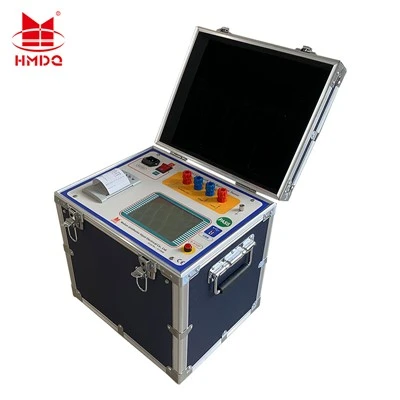
If you’re ready to get your tester calibrated, or if you’re in the market for a new vacuum switch tester that’s built to hold its calibration longer (we use higher-grade sensors in our units specifically to reduce drift), reach out to my team. We can walk you through our calibration process, answer any questions you have about how often you need it, or help you pick the right tester for your workflow. Don’t wait for a problem to happen—fix it before it starts.
Lighting Arrester Lnsulator Tester References:
- IEEE C37.100, “IEEE Standard for Common Specifications for High-Voltage Switchgear and Control Gear”
- OSHA 29 CFR 1910.333, “Selection and Use of Work Practices”
- National Institute of Standards and Technology (NIST) Handbook 150, “Engineering Statistics Handbook”
- International Electrotechnical Commission (IEC) 62271-1, “High-voltage switchgear and controlgear – Part 1: Common specifications”
Wuhan Goldhome Hipot Electrical Co., Ltd.
Wuhan Goldhome Hipot Electrical Co., Ltd. is one of the most professional vacuum switch tester manufacturers and suppliers in China, featured by quality products and good price. Welcome to buy vacuum switch tester in stock here and get pricelist from our factory. Contact us for customized service.
Address: A25 Huading Industrial Park, Wuhan Economic and Technological Development Zone, Hubei Province
E-mail: sales@goldhomehipot.com
WebSite: https://www.goldhomehipot.com/
