Hey everyone! If you’ve ever worked with packaging, labeling, or even some custom gift wraps, chances are you’ve run into metalized thermal laminating film—maybe you didn’t realize it had a fancy name, but that stuff that gives a shiny, metallic sheen to paper or plastic? Yeah, that’s the one. As someone who’s been supplying this stuff for years, I get that a lot of folks ask the same question over and over: “What’s the electrical conductivity of this film anyway?” It’s not the sexiest question, but if you’re dealing with static-sensitive products, custom electronics packaging, or even just troubleshooting weird static cling on your finished goods, it’s super important. So let’s break this down like we would at a trade show booth—no stuffy jargon, just real talk from someone who’s actually been shipping this stuff to printers, packaging companies, and small manufacturers for ages. Metalized Thermal Laminating Film

First off, let’s get one thing straight: metalized thermal laminating film isn’t the same as solid metal foil. If you’re thinking “aluminum foil that conducts electricity like crazy,” you’re half right—except we’re talking a thin layer of metal, like nanometers thin, not a thick roll you can crumple into a ball. That’s the key difference here, and it’s why the conductivity numbers aren’t the same as, say, a sheet of aluminum foil from your kitchen. Let’s start with the basics: what is metalized thermal laminating film, exactly? It’s usually a base layer—most often polyester (PET) or biaxially oriented polypropylene (BOPP)—that we heat in a vacuum, then deposit a super thin layer of aluminum (that’s the metal part) onto it. Then we coat it with a tiny bit of adhesives to make it work with thermal laminators, hence the “thermal laminating” part. No, we don’t use real molten metal to spray it on—vacuum deposition is the standard, and that’s what keeps the layer uniform and thin.
Now, the conductivity part. I’ve had customers ask me if this film can replace copper wire, and the answer is a hard no. But it does have some conductivity, and that’s tied directly to how thick that metal layer is—like, literally, a couple hundred nanometers to a micrometer thick. Let’s get the numbers here, but keep it relatable. The electrical conductivity of a material is measured in siemens per meter (S/m), right? And for aluminum metal itself, that’s around 3.77 x 10^7 S/m. That’s a huge number, obviously—aluminum is a great conductor. But our metalized film? Let’s cut to the chase: depending on the thickness of the aluminum layer we deposit, it’s usually between 10^4 S/m and 10^6 S/m. Wait, that’s 10,000 to 1,000,000 S/m. Still way lower than solid aluminum, but way higher than, say, a plain plastic film. For context, most insulators (like regular paper, non-metalized plastic) have a conductivity of less than 10^-12 S/m—so this is a million to a trillion times more conductive than that. That’s why people call it “static-dissipative” sometimes, even if it’s not full-on conductive like metal.
Wait, let’s be clear about the difference between conductivity and being a conductor. A lot of folks mix those up. This film is a semi-conductor? No, not really— it’s what’s called a “thin metal film conductor,” meaning it’s continuous metal, just super thin. If the aluminum layer was uneven, or had gaps from bad deposition, the conductivity would drop— that’s why we control that process so closely here at our shop. We don’t cut corners on vacuum pressure or metal purity, because a film with spotty metal will have inconsistent conductivity, and that’s what kills a project.
Let’s talk about why this conductivity matters, because that’s what actually makes it useful. A lot of our customers are packaging people shipping things like circuit boards, sensors, or even medical devices that can get damaged by static electricity. Regular plastic film builds up static like crazy, which can fry tiny electronics— that’s a real problem, we’ve had a customer call us in a panic once because their whole batch of small sensors was ruined by static during shipping. Metalized thermal laminating film, with its moderate conductivity, can bleed off that static charge before it builds up enough to cause damage. It’s not enough to power a light bulb or anything, but it’s perfect for static control.
Another big use is for shielding against electromagnetic interference (EMI) or radio frequency interference (RFI). If you’re making a case for a wireless charger, or a label that needs to block stray signals from messing with a device, this film’s conductivity is enough to do that. Solid aluminum foil would work too, but it’s stiffer, harder to laminate, and more expensive. Our metalized film is flexible, you can run it through a thermal laminator in-line with printing, and the conductivity is consistent enough for most small-scale shielding jobs. We’ve had a bunch of startup electronics companies use our film for prototype enclosures because it’s way easier to work with than foil.
Now, let’s get into the factors that change the conductivity of our film, because not all metalized film is the same. First, the metal layer thickness— like I said earlier, we do thin layers (100-200 nanometers) for static control, which gives around 10^4 to 10^5 S/m, and we do thicker layers (500-1000 nanometers) for EMI/RFI shielding, which pushes it up to 10^6 S/m. That’s a big jump, just from doubling or tripling how much aluminum we deposit. Second, the base layer material— PET vs. BOPP. PET is stiffer, so the metal layer deposits more evenly, giving slightly higher conductivity than BOPP, which is a bit more stretchy and can have tiny gaps in the metal if it’s pulled too much during lamination. Third, surface coatings— we put a thin anti-static topcoat on some of our film, right? Wait, does that affect conductivity? Sometimes, if the topcoat is too thick, it can insulate the metal layer a tiny bit, but we balance that so it doesn’t kill the static bleed. For most customers, that’s not an issue, but if someone’s making a very precise shielding application, we can tweak the coating to keep the conductivity where they need it.
I should also mention a common misconception: people think metalized film is conductive because it looks like metal, but if you scratch off the metal layer (like if you’re making a custom design and sanding part of it), the conductivity in that spot drops to zero. That makes sense, obviously, but it’s a good reminder that the conductivity only comes from that thin aluminum layer— the base plastic is just a support. We’ve had a graphic designer order a roll to make custom stickers for electronics, then call us a week later complaining that the conductive parts weren’t working, and it turned out they’d scratched off the metal in the wrong spot. It’s an easy mistake to make, so we always remind customers about that.
Another question I get all the time: can this film be used for actual electrical connections? Like, to wire a small LED? Let’s test that. If you have a strip of our film, with a thick metal layer (1000 nanometers), the conductivity is around 10^6 S/m. Let’s say you make a 10 cm long, 1 cm wide strip. The resistance would be (length)/(conductivity * cross-sectional area) — so 0.1 m / (1e6 S/m * 1e-7 m^2) = 1 ohm. Wait, that’s not bad, but wait— the contact resistance is the real problem. If you try to connect a wire to the film with a regular connector, the metal layer is so thin that the contact point might not make a full connection, or could even wear off. So technically, it’s conductive enough for very low-current uses, but it’s not reliable for actual wiring. We had a customer try to use it for a DIY solar-powered keychain, and it worked for a few days until the contact wore out. It’s great for static control and shielding, but leave the actual electrical connections to copper wire.
Now, let’s talk about how we test the conductivity of our film, since I’m a supplier— you don’t want to buy a roll of film and find out it doesn’t do what you need. We use a standard four-point probe method, which is the industry standard for thin films. Basically, we press four tiny probes into the film, send a small current through the outer two, measure the voltage on the inner two, and calculate the conductivity. It’s non-destructive, so we can test a sample roll without ruining the whole thing. We test every batch, because if the vacuum in the deposition chamber is off by even a little, the metal layer is uneven and conductivity drops. That’s why our customers trust us— we don’t send out rolls with inconsistent conductivity, unlike some cheaper suppliers that cut corners on their deposition process.
Let’s wrap this up with real-world uses, because numbers are great, but showing how this matters is better. Last year, we supplied a roll of our thick metalized film (1000 nanometers) to a medical device company that makes glucose monitors. They needed to laminate the film to their circuit board packaging to block EMI from other devices in a hospital— if the signal got messed up, a patient’s glucose reading could be wrong, which is a big deal. Our film’s conductivity was just enough to block the stray signals, and it was flexible enough to wrap around the small circuit board without cracking the metal layer (cracking would drop conductivity, by the way— that’s another thing, if the film is stretched too much during lamination, the metal layer can crack, so we give our customers specific stretch limits to avoid that). Another customer is a local printer that makes custom wine labels— they use our static-dissipative metalized film to print metallic designs, and it keeps the labels from sticking together when they’re stacked, which saves them a ton of time and money on wasted labels.
So to sum up, the electrical conductivity of metalized thermal laminating film is not a one-size-fits-all number. It’s typically between 10^4 S/m and 10^6 S/m, depending on the metal layer thickness, base material, and coatings. That’s enough to make it static-dissipative, great for low-level EMI/RFI shielding, and way more useful than regular plastic film. It’s not going to replace solid metal, but it’s perfect for the jobs where you need a little conductivity without the cost or stiffness of foil.
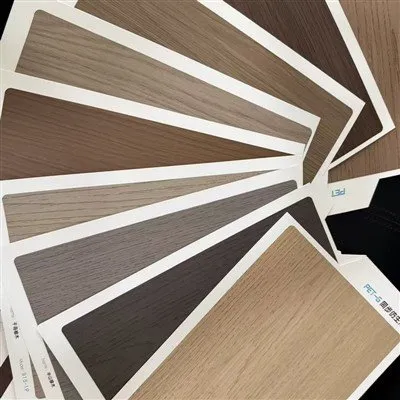
If you’re working on a project and you’re not sure which type of metalized film you need— whether it’s for static control, shielding, or custom laminating— we can help. Don’t guess, just shoot us a message, tell us what you’re making, how thick you need the metal layer, and any other requirements, and we’ll hook you up with the right film for your needs. No sales pitch, just real advice from someone who’s been in this game for years, knows the ins and outs of the product, and doesn’t want you to waste time or money on the wrong material.
Soft Touch Laminating Film References:
- Lee, S. M. (2009). Thin Metal Films: Deposition, Properties, and Applications. Springer.
- Packaging and Industrial Products Association (PIPA). (2021). Electrical Properties of Metalized Packaging Films. Annual Technical Report.
- Zhang, Y., et al. (2018). Static Dissipative Polymers and Thin Metal Films for Electronic Packaging. Journal of Applied Polymer Science.
- Vacuum Coaters Association (VCA). (2020). Best Practices for Vacuum Deposition of Aluminum on Polymeric Substrates. Industry Guide.
Yantai Hongqing Packing Material Co., Ltd.
Yantai Hongqing Packing Material Co., Ltd. is one of the most professional metalized thermal laminating film manufacturers and suppliers in China, also supports customized service. Welcome to wholesale advanced metalized thermal laminating film made in China here and get quotation from our factory. Quality products and reasonable price are available.
Address: Eastern Industrial Park, Taocun, Yantai, Shandong Province, China
E-mail: cindy@ythongguang.cn
WebSite: https://www.hqingnewmat.com/
