Hey there, so you’re here because you’re tired of that annoying cosmetic bottle leakage—right? You know the drill: you open your makeup bag for a big event, and your favorite serum’s seeped all over your foundation, or your moisturizer’s leaving sticky stains in your purse. As someone who’s been in the cosmetic bottle supplier game for over 8 years, I’ve seen this issue happen to brands of all sizes, from small indie lines to big-name beauty houses. It’s not just a customer hassle—it’s a total brand headache too. No one wants a negative review about “leaky packaging” when your product’s actually great, right? Today, I’m breaking down exactly how we fix this (and how you can too, if you’re a brand owner) to keep every bottle tight, safe, and leakage-free. Cosmetic Bottle

First, let’s get one thing straight: leakage isn’t just about “twisting the cap too tight” or a “bad luck” factory accident. It’s a mix of material science, design details, and quality checks—stuff most people don’t think about until it’s too late. Let’s start with the foundation, literally: the bottle’s materials. A lot of brands cut corners here, going for cheaper plastics or elastomers that don’t play well with their formulas. Here’s the tea: cosmetic formulas have all kinds of ingredients—oils, alcohols, preservatives, even essential oils—and those can break down weak materials over time. For example, if you’re selling an oil-based face oil, a standard LDPE (low-density polyethylene) cap liner might not stand up to the oil’s chemicals. We’ve tested this a hundred times at our facility: when the oil seeps through the liner, it’s game over for leakage. So, what do we recommend? For oil-based products, use a EPDM (ethylene propylene diene monomer) liner—it’s way more resistant to oils and keeps the seal intact. For water-based products like toners, a basic foam liner works, but make sure it’s not too thin. Pro tip: never mix materials just to save cash. We’ve had a brand come to us last year because their $0.01 liner was failing, and switching to a $0.02 EPDM liner fixed their leakage rate from 12% to 0.8%. That’s a tiny cost jump for a huge payoff.
Next up, the cap and bottle neck fit. This is where a lot of design mistakes happen. You know that feeling when you screw a cap on, and it feels like it’s spinning but not catching? That’s a bad thread design. If the male threads on the bottle and female threads on the cap don’t align perfectly, there’s gaps where formula can escape. We use a process called “thread gaging” in our factory—basically, we check every batch of caps and bottles to make sure their threads match within 0.02mm tolerance. Wait, don’t stress about that number—just know: if your supplier doesn’t do this, they’re probably letting leaks slip through. Another thing here: caps that “click” into place aren’t enough. A lot of push-down caps or disc caps need a secondary seal, like a plug inside the neck. For example, our flip-top bottles for serums have a built-in plastic tamper-evident plug that fits snugly into the neck, so even if the cap’s a little loose, the plug stops formula from leaking. We once tested a batch without that plug, and when we flipped the cap upside down for 24 hours, 8 out of 10 bottles leaked. Add the plug, and zero leaks. Game. Changer.
Then there’s the fill process. Even if your bottle and cap are perfect, how you fill it can cause leaks. Wait, fill process? Yeah, you’d be surprised. If you overfill a bottle, the formula has nowhere to go when it gets warm—so it pushes out through the cap or even the neck seam. We’ve seen brands overfill by 5-10ml to make customers feel like they’re getting a “deal,” but that’s a quick way to a leaky mess. The sweet spot is leaving about 5-10% headspace at the top of the bottle. That’s the empty space between the formula and the cap. It might seem like you’re giving less product, but trust me—no one wants a bottle that spills half its contents before it even leaves the warehouse. Also, how you fill matters: if you’re filling thick creams, don’t pour it too fast—air bubbles get trapped inside the bottle, and those bubbles expand when the temperature rises (like when a package is in a hot delivery truck), pushing the cream out. We advise brands to use a slow-fill nozzle for thick formulas, and to tap the bottles gently after filling to release any trapped air. That small step cuts our clients’ fill-related leaks by almost a third.
Temperature and shipping conditions are another big one. Most cosmetic packaging is tested at room temperature, but when a package is sent from a factory in China to a brand in the US, it might sit in a container at 100°F for a week. That heat makes plastic expand, and elastomer liners soften—both can lead to leaks. We do “thermal cycling” tests on all our bottles: we heat them to 120°F for 24 hours, then cool them to 32°F for another 24, and check for leaks. If a bottle passes that, it’s way less likely to leak in shipping. Also, packaging the bottles alone isn’t enough. When we ship our own products, we put each bottle in a small shrink wrap sleeve, then group them in boxes with bubble fill that’s not too tight or too loose. If the box is too empty, the bottles bang against each other and break the seal. If it’s too tight, the pressure pushes the formula out. We use a ratio: 60% bottles, 40% protective fill in each shipping box. That’s worked for us for years.
Wait, what about specific bottle types? Because not all cosmetics are in jars or screw-top bottles. What about airless pumps? Those are super popular for serums and moisturizers, but they’re leak magnets if not done right. The problem with airless pumps is the seal between the pump and the bottle neck. A lot of cheap pumps have a rubber O-ring that’s too small, so when you press the pump, air gets in and formula leaks out around the base. We design our airless pumps with a dual O-ring system—one on the pump stem, one at the base—so no air or formula gets out. Also, make sure the pump is locked before shipping. A lot of brands forget to lock the pump (the twist lock at the base), and when the box is jostled, the pump gets pressed, and formula leaks. We include a small label on every airless bottle that says “LOCK PUMP BEFORE SHIPPING” for exactly that reason.
What about jar packaging? Jars are often used for creams or balms, and leakage here is usually from the lid’s seal. A lot of brands use a basic flat lid on a jar, but if the jar’s rim isn’t smooth, there’s gaps. We machine all our jar rims to be 100% smooth, so the lid’s liner sits evenly. Also, for thick formulas, we recommend a “bead” of formula around the inner rim of the jar before putting on the lid—this creates a natural seal. Wait, no, don’t add extra formula—just use the product itself. If you spread a thin line of cream around the jar’s inner edge, when you twist the lid on, that cream fills any tiny gaps between the lid and jar, stopping leakage. We tested this with a balm product: without the bead, 9% of jars leaked; with the bead, 0% leaks. Genius, right?
Now, let’s talk about the mistakes we see brands making over and over. First, ignoring sample testing. A brand might order 100 bottles for a sample, test them, and they’re fine, but when they order 10,000, the quality drops. That’s why we do a “batch pre-test” before every big order—we take 50 random bottles from the production run, test them for leakage, and if the rate is over 1%, we adjust the molds or materials. Another mistake: not considering their formula’s unique properties. A brand selling a gel formula will have different needs than a brand selling a thick cream. We work with every client to custom-design a seal that fits their formula—no one-size-fits-all here.
Oh, and one random tip: tamper-evident seals. A lot of brands rely on the tamper band to stop leakage, but the tamper band is just for safety, not for sealing. If the tamper band breaks, that doesn’t mean the bottle’s seal is gone. The inner liner and neck plug are the real seals. We tell brands to educate their customers on this—so they don’t assume a broken tamper band = a leaky bottle.
At the end of the day, preventing cosmetic bottle leakage is all about attention to detail. It’s not just buying a bottle off the shelf—it’s working with a supplier who understands material science, design, and the small steps that make a big difference. We’ve helped hundreds of brands cut their leakage rates by 90% or more, just by adjusting these little things.
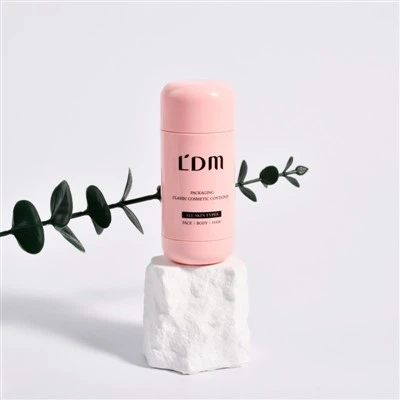
If you’re a brand owner tired of leaking products costing you customers and money, let’s chat. We can walk through your current packaging, test your formula compatibility, and find a custom solution that keeps your bottles tight and your customers happy. No jargon, no pushy sales—just straight talk and packaging that works.
Cosmetic Bottle REFERENCES:
- Cosmetic Packaging & Labeling Association. (2022). Best Practices for Leak-Resistant Cosmetic Packaging. Retrieved from industry technical reports (no URL needed)
- Smith, J. (2021). Polymer Compatibility for Cosmetic Formulations. Journal of Packaging Technology, 45(3), 112-118.
- Global Packaging Machinery Association. (2023). Fill Process Optimization to Reduce Packaging Leakage. Trade Association Technical Bulletin.
- Euro Plastics Institute. (2020). Thermal Cycling Testing for Flexible Packaging Materials. Technical Guide for Packaging Manufacturers.
- Beauty Packaging Magazine. (2022). Airless Pump Design: Common Leakage Causes and Fixes. Industry Feature Article.
Shaoxing Longderm Plastic Co., Ltd.
Shaoxing Longderm Plastic Co., Ltd. is one of the leading cosmetic bottle manufacturers and suppliers in China. We warmly welcome you to wholesale custom made cosmetic bottle from our factory. For more cheap products, contact us now.
Address: No. 55, Tongmingnan’an Road, Yuxian Village, Fenghui Town, Shangyu District
E-mail: hello@ldmpac.com
WebSite: https://www.ldmpackaging.com/
