If you’ve walked the halls of a manufacturing trade show in the last year, you’ve likely felt the hum of something different—no longer just the whine of cutting tools, but a quieter, more precise rhythm that seems to adapt to what’s being made right there on the shop floor. As a machining center supplier who’s spent decades talking to production managers, plant supervisors, and technicians, I’ve seen machining centers evolve from rigid, one-purpose workhorses to smart, flexible partners that turn complex ideas into parts faster, with less waste, and fewer headaches than ever before. The advancements aren’t just incremental tweaks to old hardware, either—they’re shifts that change how teams design, program, and run their shops. Let’s break down the latest moves shaping the industry, and what they mean for anyone looking to upgrade their equipment. Machining Center

For a long time, the biggest bottleneck in machining wasn’t the machine itself—it was the programming and setup. A technician would spend hours calculating tool paths, adjusting speeds and feeds for different materials, and testing cuts on a test part, only to find a small error that threw off a production run. That’s all changed with the rise of AI-driven process optimization and digital twin technology, two advancements that have gone from a “nice-to-have” in R&D to a standard feature on mid-range and high-end machining centers over the last two years.
Digital twins, first, aren’t just 3D models you look at on a screen anymore. Today’s digital twins are dynamic, connected copies of a machining center that mirror every movement, temperature, and tool condition in real time. When a programmer creates a new part program, they can run it on the digital twin first—testing for collisions, simulating tool wear, and even adjusting for material variations before a single chip is cut on the actual machine. Last quarter, a customer of mine in the aerospace industry used this feature to cut their setup time for a complex turbine blade from 12 hours to 2 hours. Before, they’d have to run a test part, make three or four adjustments, and risk ruining a block of titanium if a tool veered off line. Now, the twin catches those issues before they hit the shop floor. Add in AI algorithms that pull data from hundreds of thousands of past part runs, and those systems can automatically adjust tool paths to minimize cycle time while keeping surface quality consistent. I’ve seen AI reduce cycle times by 15 to 20 percent on runs of 1,000+ parts, not because the machine is moving faster, but because it’s wasting less time on unnecessary moves and adjustments.
Another big shift is in machine structure and spindle technology, driven by demand for parts that are larger, more precise, and made from hard-to-machine materials like high-strength aluminum, carbon fiber composites, and Inconel. For years, machining centers relied on cast iron frames, which are heavy and stable, but can’t handle the extreme speeds and forces needed for today’s materials without vibration or heat buildup. The latest generation uses modular, lightweight composite frames—carbon fiber reinforced polymer, mostly, paired with precision-engineered cast iron bases—to balance rigidity and speed. These frames dissipate heat far better than old designs, so a spindle running at 18,000 RPM for 10 hours won’t warp or shift even thousandths of an inch, which is critical for parts like automotive engine blocks or medical implants that require tolerances of less than 0.001 inches.
Spindles themselves have also evolved. We used to think more power meant better cuts, but now it’s about torque density and variable speed. The new direct-drive spindles, which eliminate belts and gears, cut vibration and increase speed range while reducing maintenance—no more changing belts every three months, no more gear wear. For shops that machine a mix of soft aluminum for automotive parts and hard steel for tool components, these spindles can switch speed and torque in milliseconds, without the lag that old gear-driven systems had. A customer in the heavy machinery industry told me they used to run two separate machines: one for roughing steel, one for finishing aluminum. With a new machining center that has a modular spindle and tool changer, they run both jobs on the same line, cutting their floor space needs by 30 percent and their labor time per part by half.
Tool management is another area where the latest advancements are eliminating a huge, hidden source of downtime. How many times has your shop had to pause a run because a tool snapped unexpectedly, or a worn edge ruined a batch of parts? The latest machining centers integrate in-situ tool monitoring systems that don’t just measure tool length and diameter when the tool is first loaded—they check for wear, breakage, and even coating degradation mid-run, in real time. Some of these systems use acoustic sensors that listen to the sound of a cut: a sharp, consistent hum means the tool is in good shape, a high-pitched whine means it’s worn, and a sudden change means it’s broken. Others use low-power cameras or laser probes to scan the tool’s edge every time it moves to a safe position in the machine.
What’s more, these systems are connected to the machine’s inventory management software, so they can automatically order replacement tools when wear crosses a threshold, or flag a tool that’s been used too many times for a high-precision job. I worked with a mold making shop last year that was losing 10 to 15 hours a month to unplanned tool changes and bad parts from worn tools. After installing the new monitoring system, they cut that downtime to less than 2 hours a month, and their part reject rate dropped by 8 percent. It’s not a glamorous feature, but it’s one that’s had a bigger impact on overall efficiency than any speed increase I’ve seen in the last five years.
Flexibility is also non-negotiable now, as small batch production—lots of 10, 20, 50 parts—has replaced long runs of thousands as the norm for most shops. The latest machining centers aren’t just big or small; they’re modular, with quick-change workholding systems and automatic pallet changers that let a new job load on one pallet while the machine is cutting on another. Some even have multi-tasking capabilities: they can turn a part on a lathe, mill it, drill holes, and even perform light grinding all in one setup, so a part doesn’t have to move between three or four different machines. That eliminates the error of moving parts, saves time, and reduces floor space. A small job shop I supply does custom parts for 20 different industries, from medical devices to agricultural equipment. Before, they’d run 10 different jobs a week, each taking a day to switch over. Now, with a machining center that has a 10-pallet changer and multi-tasking tools, they can switch between jobs in 15 minutes, and run three or four different jobs at the same time without an operator standing by to adjust the machine.
Of course, none of these advancements matter if a shop can’t get the support and connectivity to run them. The latest machining centers are part of what’s called Industry 4.0, meaning they connect to a shop’s overall management system, so you can track OEE (Overall Equipment Effectiveness), maintenance schedules, and production goals from a single dashboard. But one thing I always emphasize to customers is that connectivity isn’t just about data—it’s about support. When a new machine has a problem, we can remote into it to diagnose the issue, update software, or walk a technician through a fix in 10 minutes, instead of sending a service technician who has to travel for hours. That’s cut our customer’s machine downtime by another 10 to 15 percent in the first year after installation, and it’s saved shops thousands in service costs.
I know a lot of shop owners are wary of new technology, worried that these smart machines are too complex, or that they’ll need to retrain their entire team to run them. The truth is, the latest advancements are designed to make technicians’ jobs easier, not harder. The AI tools don’t replace operators—they handle the tedious, time-consuming parts of programming and setup, so technicians can focus on solving problems and improving their processes. We offer training programs that let operators learn the new systems in a week, not a month, and our service teams are on call to help whenever you need it.
At the end of the day, the best advancements in machining centers aren’t about being the biggest, fastest, or most high-tech. They’re about solving the problems that actually keep shop managers up at night: downtime, high reject rates, long setup times, and the need to be flexible enough to take on any job, from a single prototype to a small batch of precision parts. If you’re thinking about upgrading your machining equipment, don’t just look at speed or price tag. Ask about the digital twin capabilities, tool monitoring, pallet systems, and connectivity. Ask how the machine will adapt to your specific jobs, not just what it can do in a demo.
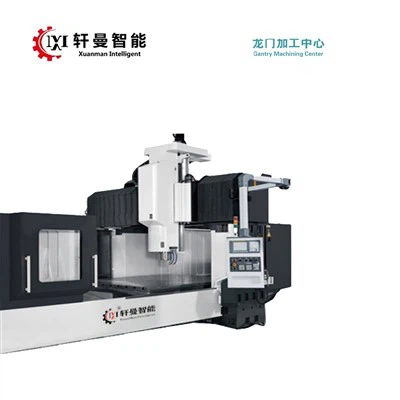
If you’re ready to see how these latest machining center advancements can help your shop cut waste, reduce downtime, and take on more profitable jobs, reach out to our team to discuss your specific needs. We work with shops of all sizes, from small job shops to large aerospace manufacturers, to find the right machining center that fits your production goals and budget.
Slant Bed Lathe References:
- IndustryWeek, "2024 Machining Trends: Smart, Flexible, and Data-Driven Production", 2024
- Society of Manufacturing Engineers (SME), "Advancements in High-Precision Machining Spindle Technology", 2023
- Manufacturing Engineering Association, "Digital Twin Adoption in Small and Medium Manufacturing Shops", 2024
- American Machine Tool Distributors’ Association (AMTDA), "Tool Monitoring and Downtime Reduction in Modern Machining", 2023
Jiangsu Xuanman Intelligent Equipment Co., Ltd.
We’re well-known as one of the leading machining center manufacturers in China, featured by quality products and low price. Please rest assured to buy discount machining center made in China here from our factory. We also accept customized orders.
Address: No. 1-1, Weier Road, Jieji Equipment Manufacturing Industrial Park, Sihong County, Suqian City, Jiangsu Province, China
E-mail: jsxmzn@163.com
WebSite: https://www.xm-cnc.com/
