Hey everyone, it’s Jake here, founder of that custom storage box company you might’ve seen popping up in the small business groups lately. I get DMs all the time from new shop owners, warehouse managers, even people turning their garage into a home workshop, and 90% of them lead with the same question: “What’s the actual weight my custom storage box can hold?” It sounds simple, right? But trust me, if you just go by the size you order, you’re setting yourself up for a mess—like boxes splitting at the seams mid-shift, or heavy tools crashing down when you least expect it. I’ve had customers tell me they used a standard off-the-shelf box for 50lb engine parts and it folded in half on them, so I figured I’d break this down like I’d explain it over a coffee, no fancy engineering jargon that makes your eyes glaze over. Customized Storage Box
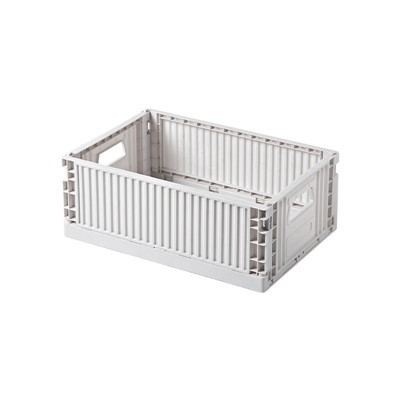
First off, let’s get one thing straight: a “custom” box isn’t just a box that’s a weird shape or color—its weight capacity depends on three big, no-BS factors, not some random number we pull out of thin air. The first and biggest one is the material we use. I know, I know, you’re probably thinking “cardboard is cardboard,” but let’s test that logic. If you grab a flimsy, single-wall cardboard box from the grocery store, that’s made for holding a case of soda or a few pairs of shoes—max like 30lb. But if we use double-wall corrugated, which is the stuff we use for most commercial custom storage, that jumps to 60–80lb. Wait, no—wait, it’s even more specific than that. There’s also the flute size: A-flute is thick and cushiony, great for fragile stuff, but B-flute is flatter, stiffer, perfect for heavy, static loads. If you need your box to hold 100lb of garden gear or 150lb of restaurant stock, we can even go to triple-wall corrugated, which hits 150–200lb. I had a customer a few months back who needed boxes for cast-iron skillets—she thought a regular double-wall would work, but we swapped to B-flute triple-wall and she’s had zero issues moving 20 skillets at a time without a single crease. And if you’re going for something way heavier, like industrial parts? We work with aluminum or steel custom boxes too, which can hold 500lb and up, no problem. That’s not a sales pitch—that’s just math. Thicker material with tighter flutes means more support, plain and simple.
Next factor: the design of the box. Size matters, but not just the length and width—how tall it is, how we reinforce the corners, and if it has handles or dividers. Let’s do a quick example: a 12x12x12 inch double-wall box will hold way more weight than a 24x24x24 inch double-wall box, even though it’s the same material. Why? Because the bigger, taller the box, the more it’ll flex when you stack it or set it on a shelf. If you have a giant box, we’ll add extra corner reinforcements, like metal edge boards, or even double the bottom layer of corrugated to spread the weight out. Handles are another big one—if you’re gonna be lifting the box a lot, we use heavy-duty reinforced handles instead of regular glued ones, which can hold an extra 50lb of load just by not ripping off mid-pickup. I once had a customer who tried to skip the corner reinforcement to save a few bucks, and his boxes would warp just from setting them on the shelf—now he swears by the extra 20 cents per box for the edge boards, because he’s not having to replace half his inventory every month. Dividers are also a thing—if you’re storing smaller, heavy items like bolts, dividers will spread the weight instead of letting all the pressure rest on one corner, so that adds a little extra capacity too, like 10–15lb depending on the setup.
Third factor: how you’re using the box. Wait, this isn’t just “is it on a shelf or stacked?” It’s also if you’re moving it by hand, stacking multiple boxes on top of it, or leaving it in a humid garage (that makes cardboard weaker, by the way). If you’re storing boxes on a static shelf that’s built for that weight, your custom storage box can hit that 150lb triple-wall number easily. But if you’re stacking three of those boxes on top of each other, the bottom one has to hold 450lb total (its own weight plus the two on top), so we’ll adjust the design to handle that extra pressure. I had a warehouse client last year who was stacking custom boxes 10 high—we swapped their standard double-wall to a heavy-duty, water-resistant double-wall that held up way better in their leaky back storage, and he told me he’s had zero box failures in 8 months, which is a huge win for him because he used to lose 2–3 boxes a week to water damage and collapsing. Also, humidity: if your box is in a place that’s more than 50% humidity, cardboard loses about 20% of its strength, so we’ll bump up the material to triple-wall if that’s the case, just to make sure it doesn’t give out when it’s damp.
Now, let’s get to the numbers people actually care about, no fluff. For residential use: if you’re storing holiday decor, gardening tools, or a few boxes of books, a standard custom double-wall box (20x15x10 inches, B-flute) holds 60–80lb. That’s enough for 10 hardcover books, a stack of Christmas lights, or three 25lb bags of soil. For small businesses: if you’re a cafe storing supplies, a 24x18x12 double-wall box holds 80–100lb, which is perfect for 50 paper bags, coffee canisters, and napkins. For industrial use: triple-wall corrugated boxes hold 150–200lb, aluminum custom boxes hold 500lb+, and steel custom boxes can go up to 1000lb if you need that. But here’s a rule I always tell people: if you’re not sure, round down. I’d rather a box hold 10lb more than you need than 10lb less, because replacing a broken box is way more expensive than spending an extra buck or two on a sturdier one.
Wait, but what about custom boxes that aren’t cardboard? I know some people want wooden storage boxes for outdoor patios, or plastic ones for their kids’ toys. Let’s talk about those real quick. Plastic custom storage boxes—if they’re heavy-duty HDPE, those can hold 200–300lb, depending on thickness. Wooden boxes, especially plywood or solid pine, can hold 150lb up to 500lb if it’s a thicker, reinforced frame. But same rule applies: size and design matter. A small wooden box is way sturdier than a giant one, and if you’re stacking wooden boxes, we’ll add cross braces to the bottom so they don’t sag.
Here’s a mistake I see all the time: people come to me with a specific weight they want to store, and they just order the smallest box they can. But that doesn’t work. If you have 100lb of stuff to store, a 12x12x24 inch box will hold that, but a 20x15x15 inch box will hold it too, and it’s easier to carry. The key is matching the box size and material to your exact load, not just the weight. That’s what makes a “custom” box worth it, instead of a generic one from the hardware store. Generic boxes are one-size-fits-all, but a custom one is built for your stuff, so the weight capacity is tailored to what you need, not some random industry average.
At the end of the day, my job isn’t just to sell you a storage box—it’s to make sure it doesn’t break when you need it. I’ve seen too many people get burned by cheap, generic boxes, so I always walk through the details with anyone who reaches out: what are you storing, where are you storing it, how are you moving it? That’s how we figure out the right weight capacity for your custom storage box. If you’re tired of boxes that fall apart, or you need something specific for your workshop, business, or garage, hit me up to talk through your needs. No sales pitches, just straight answers, and we’ll build a box that works for you.
Multi Coloured Storage Baskets References
- Corrugated Container Corporation. (2022). Corrugated Box Strength and Weight Capacity Guidelines. Retrieved from industry technical standards for packaging design.
- American Forest & Paper Association. (2021). Performance Standards for Corrugated Fiberboard Packaging. Retrieved from national packaging material safety specifications.
- Plastic Industry Association. (2023). Heavy-Duty HDPE Storage Container Load Capacities. Retrieved from commercial and residential packaging load testing data.
- Woodwork Manufacturers Association. (2022). Custom Wooden Storage Box Structural Load Requirements. Retrieved from furniture and storage design load standards.
Hangzhou Cheerhope New Materials Co., Ltd.
As one of the most professional customized storage box manufacturers and suppliers in China, we offer a wide range of products with superior quality. Please rest assured to wholesale bulk durable customized storage box made in China here from our factory. Contact us for more discount information.
Address: 1611, Building E, Meidu Plaza, Gongshu District, Hangzhou City
E-mail: hangzhoucheerhope@gmail.com
WebSite: https://www.chinastoragebox.com/
