If you’ve ever sourced PCBs for high-frequency electronics, medical devices, or next-gen smartphones, you’ve likely stumbled on two buzzwords: HDI PCBs and RoHS compliance. As someone who’s been in the HDI PCB supply game for over a decade, I get that confusion around these two topics is constant. New clients often reach out, asking variations of the same question: “My design calls for a high-density interconnect (HDI) board—can you guarantee it’s RoHS compliant?” It’s a fair question. RoHS rules aren’t just red tape; they directly impact a product’s ability to hit global markets, from EU CE marking to US Federal Trade Commission standards, and even long-term product safety for end users. Today, I’m breaking down the real answer to “Are HDI PCBs RoHS compliant?” with the kind of hands-on, supplier-level context that spec sheets never mention. HDI PCBs

First, let’s get clear on what we’re talking about, because “HDI PCB” and “RoHS compliant” are both terms that get twisted by oversimplification. HDI stands for High-Density Interconnect—PCBs that use microvias (vias smaller than 0.1mm in diameter), build-up layers, and finer line/space traces (often 25 microns or less) to cram more functionality into a smaller board than standard PCBs. You’ll find them in everything from wearables to 5G base stations, where every millimeter of space counts. Then there’s RoHS: the Restriction of Hazardous Substances Directive, first issued by the EU in 2003, updated to RoHS 2 (2011) and RoHS 3 (2015), which restricts 10 hazardous substances in electrical and electronic equipment (EEE): lead (max 0.1% by weight), mercury, cadmium, hexavalent chromium, polybrominated biphenyls (PBB), polybrominated diphenyl ethers (PBDE), and four phthalates added in RoHS 2 (bis(2-ethylhexyl) phthalate, butyl benzyl phthalate, dibutyl phthalate, diisobutyl phthalate).
The biggest myth I’ve seen over the years is that all HDI PCBs automatically check the RoHS box. That’s far from the truth. RoHS compliance depends on every single material and process step that goes into manufacturing the board, not just whether you call it HDI. Let’s walk through the common pitfalls that even experienced HDI suppliers can trip over, because these are the same issues I’ve had to troubleshoot for clients that thought their HDI design was on track for global markets—until a third-party inspector flagged a hidden non-compliance.
First, base materials. HDI PCBs rely heavily on high-performance substrates to handle the tight traces and microvia demands: things like high-Tg FR-4, Rogers laminates, or polyimides for flexible HDI boards. The problem is that some older or lower-cost substrate lines—especially surplus FR-4 batches from the early 2000s, pre-RoHS—still use PBB or PBDE as flame retardants. Ten years ago, we had a client that ordered custom HDI boards for a medical sensor prototype, used a cheap overseas substrate supplier without checking RoHS documentation, and got a batch that tested positive for trace PBDE. That cost them three months of delays re-spinning boards and re-certifying their prototype. It’s a avoidable mistake, but it’s extremely common. Even modern substrates can have hidden non-compliance if they’re not sourced properly: for example, some copper-clad laminates use lead-based adhesion promoters that can leach into the finished board if not formulated to RoHS limits. When we source substrates for our HDI lines, we require full lot-specific COAs (Certificates of Analysis) that explicitly list RoHS substance levels, not just generic “RoHS-friendly” claims. A lot of suppliers will give you a one-line note that a substrate is RoHS compliant, but the good ones will break down each substance’s percentage by weight for every production batch.
Next, metallization for microvias and circuit traces. This is where HDI manufacturing gets tricky, and where non-compliance can creep in even if all your substrates check out. Microvias in HDI boards require precise plating: copper plating for traces, sometimes gold or tin for surface finishes. The risk here is twofold: first, lead in plating baths. For decades, plating solutions used lead as a grain refiner for copper, because it was cheap and worked well. Today, that’s strictly regulated under RoHS. We switched our copper plating baths to lead-free formulas back in 2012, but I still hear from smaller HDI shops that cut corners to save costs, mixing in a small amount of lead to get consistent plating thickness. That’s a huge red flag for clients exporting to the EU, because even trace levels of lead in plating can push a board over the 0.1% weight limit. The second metallization pitfall is surface finishes. Common surface finishes for HDI include ENIG (Electroless Nickel Immersion Gold), HASL (Hot Air Solder Leveling), and immersion tin. Old-school HASL uses lead solder, which is an automatic RoHS failure unless it’s lead-free HASL. ENIG, while generally RoHS compliant, can have issues if the nickel plating layer contains hidden lead, or if the gold flash used for wire bonding has residual lead impurities. We test every surface finish batch at our in-house lab (we do routine third-party testing too, for full peace of mind) to make sure none of these metals exceed RoHS limits.
Then there are the hidden process chemicals, which are often overlooked but make up a huge part of HDI board compliance. Etchants, solder masks, and resist materials all can have RoHS-restricted substances. For example, older solder masks used PBB or PBDE as flame retardants, and even some modern lower-cost solder masks still have trace levels that can fail testing. We only work with solder mask suppliers that offer RoHS-compliant, halogen-free formulas, and we test every coated board for volatile organic compounds and restricted flame retardants. Another process step: the laser ablation used to drill microvias in HDI boards. Some older laser systems use chrome or lead in their lenses, which can leave microscopic residues on the board surface that show up in RoHS testing. We upgraded our laser ablation equipment in 2018 to RoHS-compliant systems that don’t leave residual heavy metals, but that’s an investment many small HDI suppliers skip, leading to occasional test failures.
Now, let’s talk about the exceptions, because not all HDI PCBs need to be fully RoHS compliant. Wait—did you read that right? Yes, and it’s a point that trips up a lot of new product engineers. RoHS applies to EEE placed on the market in the EU, UK, and other countries that have adopted equivalent regulations. If you’re designing a prototype that will only be used in-house for testing, or a low-volume product that’s never going to cross borders to regions covered by RoHS, you can use non-RoHS HDI PCBs and save a little on costs. But if you’re targeting any commercial market, medical device, aerospace part, or consumer product that will be sold globally, 100% RoHS compliance for your HDI PCBs is non-negotiable. It’s not just a regulatory checkbox either: many big-name OEMs (Apple, Siemens, Philips) require full RoHS compliance for all their component suppliers, because their own supply chains are RoHS audited. If a single HDI board in their product fails a RoHS test, they can pull the entire line from shelves, which is a costly mistake no one wants to make.
So, what does RoHS-compliant HDI PCB manufacturing look like in practice, from a supplier’s perspective? Let’s break down our internal process, because this is what we do every day to deliver compliant HDI boards. First, pre-production material validation: before we even start an HDI order, we pull full COAs for every substrate, plating chemical, solder mask, and surface finish. We cross-check every lot against RoHS limits, and if any material is outside spec, we send it back immediately—no exceptions. Second, in-process testing: every 50 boards from a production run, we pull a sample and run X-ray fluorescence (XRF) testing, which scans for heavy metals like lead, cadmium, and chromium, and does a quick check for phthalates and brominated flame retardants. This catches issues mid-run, before we waste time and materials on a full bad batch. Third, final certification: for every order over 100 units, we provide a full RoHS compliance certificate, including third-party test results from an accredited lab like UL or Intertek, so our clients can submit that documentation to their own regulatory teams. We also keep all our material test records on file for 7 years, which is a requirement for RoHS audits in most regions—if a client is audited down the line, we can pull all that paperwork in 24 hours.
I want to be transparent here, too—RoHS compliance isn’t free, and it’s not instant. HDI manufacturing is already more complex than standard PCB manufacturing, with tighter tolerances and more precise processes, so adding RoHS checks means extra steps: more testing, better material sourcing, higher-grade equipment. That’s why you’ll see some suppliers offering cheap HDI boards that claim RoHS compliance, but when you actually test them, they fail. We’ve turned down multiple orders over the years where clients asked for lower prices by using non-RoHS materials, because we’d rather keep our reputation than risk a client’s product being pulled from the market. One of our regular clients is a maker of 5G base station components; they switched to us three years ago because their old HDI supplier kept sending boards that failed RoHS random audits, delaying their product launches by months. For us, building trust through compliance is worth more than cutting a corner on a price.
Another common question we get: what about RoHS exemptions? Are there any cases where an HDI PCB can have higher levels of restricted substances? The short answer is yes, but only for specific, authorized exemptions, and even then, it’s rarely used for most HDI applications. For example, RoHS has exemptions for lead in high-temperature solders used for aerospace applications, or lead in certain nickel alloys for medical devices. But these exemptions are tightly regulated, and you can’t just decide to use higher levels of lead because you “need it for HDI.” If you’re applying for an exemption, you have to submit extensive documentation to the EU, and it only applies to specific product categories, not general HDI boards. Most of our clients don’t qualify for exemptions, so we build all our HDI boards to the full RoHS limit, no exceptions.
Let’s circle back to that original question: “Are HDI PCBs RoHS compliant?” The honest answer is: they can be, if they’re manufactured properly, with the right materials, processes, and testing. But they are not inherently compliant just because they’re HDI. Too many factors go into compliance—substrate chemicals, plating baths, surface finishes, process residues—that can trip up even the most well-designed HDI board. As an HDI supplier, our job isn’t just to drill microvias or lay fine traces; it’s to make sure every single board we ship meets all the regulatory requirements our clients need, so they don’t have to worry about delays, fines, or product recalls because of a faulty PCB.
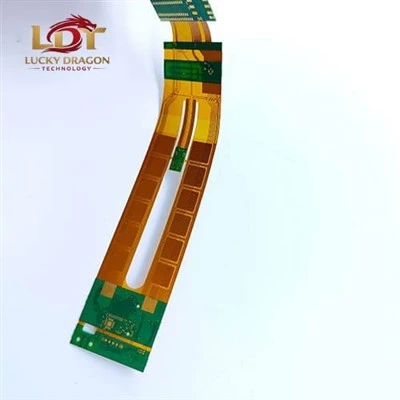
If you’re working on a new design that requires HDI PCBs and need to confirm compliance for your target markets, feel free to reach out to discuss your specific project requirements. We’re here to walk you through our material sourcing, testing processes, and compliance documentation, so you can be confident your next board order checks all the boxes for RoHS and performance.
High Tg PCBs References:
- Directive 2011/65/EU of the European Parliament and of the Council of 8 June 2011 on the restriction of the use of certain hazardous substances in electrical and electronic equipment (RoHS 2)
- International Electrotechnical Commission (IEC) 61249-2-21:2019, Printed board materials – Part 2-21: Detailed specification for base materials – Glass fabric reinforced epoxy woven copper-clad laminates, for use in the manufacture of printed boards
- IPC-4101B:2018, Specification for Base Materials for Rigid and Multilayer Printed Boards
- IPC-2221B:2020, Generic Standard on Printed Board Design
- United States Environmental Protection Agency (EPA) Guidance on RoHS Equivalence for US Electrical and Electronic Equipment Regulations
Lucky Dragon Technology Shenzhen Co., Ltd.
With abundant experience, we are one of the most professional hdi pcbs manufacturers and suppliers in China. We warmly welcome you to buy bulk high quality hdi pcbs for sale here from our factory. If you have any enquiry about cooperation, please feel free to email us.
Address: 5th Floor, Building 1, Jinshan Industrial Park, 375, Xixiang Section, Guangshen Road, Xixiang Street, Baoan District, Shenzhen City, Guangdong Province, China
E-mail: sales@Ldtac.com
WebSite: https://www.ldtac.com/
