Let me start by saying, when people first reach out to our team as a monocrystalline solar panels supplier, one of the most common questions isn’t about efficiency or warranties—it’s about size. I’ve lost count of how many times a customer will call or shoot us an email, curious if all monocrystalline panels are cut from the same mold, so to speak. It’s a fair question, too. For someone just starting to look into solar, it’s easy to assume all panel types follow a standard, but monocrystalline panels, in particular, have a lot of variation that ties directly to what they’re designed for. Monocrystalline Solar Panels
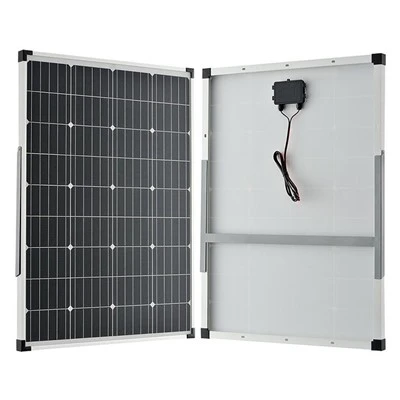
Let’s break this down. First, I want to make something clear: monocrystalline solar panels absolutely come in different sizes, and those variations aren’t random. They’re rooted in three main factors: the silicon ingots we start with at the factory, the space a customer has to work with, and the energy output they’re hoping to achieve. Unlike some older solar technologies that were limited to a single standard size decades ago, today’s monocrystalline lineups are built to fit almost every scenario—from a tiny RV roof to a large commercial warehouse.
A lot of people don’t realize that every monocrystalline panel begins as a large, cylindrical silicon ingot. We grow these ingots in a process called the Czochralski method, where a seed crystal is pulled from molten polysilicon, slowly forming a 16-inch to 20-inch long ingot. Once it cools, we slice it into ultra-thin wafers—usually around 0.2 millimeters thick—using a diamond saw. Those wafers are the core of every monocrystalline cell, and the size of the ingot directly dictates the size of the wafer, which in turn shapes how we assemble the panel. For residential panels, we typically use either 156mm or 182mm wafers, which is why most home monocrystalline panels measure around 65 inches tall by 39 inches wide. But for larger commercial panels, we might use even bigger 210mm wafers, leading to panels that are a few inches longer and wider—something we see a lot when working with businesses that need to cram as much power as possible into a big rooftop.
I’ll give you a real example from last month. A customer in Oregon reached out because they wanted to add solar to their 20-foot camper van. They had a curved roof with very limited space, so a standard 65-inch panel would have stuck up too high and hit the roof’s vent. They needed something shorter—around 48 inches long—so we worked with our production team to build a custom monocrystalline panel that used smaller 125mm wafers. That tiny panel still put out 150 watts, which was enough to power their fridge and lights, and it fit perfectly in their roof cutout. If we’d only had one size of monocrystalline panel, that customer would have been out of luck. That’s the kind of flexibility we live for as a supplier.
Now, let’s talk about the most common sizes you’ll find on the market, not just the custom ones. Residential monocrystalline panels are the most widespread, and they fall into a pretty tight range. The standard 60-cell residential panel is the workhorse of the industry—usually 65 inches by 39 inches, with a power output of 250 to 350 watts. This size is designed to fit between standard wall studs on a typical home rooftop, which is why it’s been the go-to for installers for years. Then there’s the 72-cell residential panel, which is a little taller—around 77 inches—and puts out 350 to 450 watts. Homeowners with larger roofs often pick these because they get more power per panel, so they need fewer total panels to reach their energy goals. That’s a key point: size and power go hand in hand with monocrystalline panels, because the cells are more efficient than polycrystalline ones, so a slightly larger panel will give you a lot more wattage without taking up too much extra space.
Commercial and utility-scale monocrystalline panels are a different story. For these projects, size is all about maximizing efficiency and reducing installation time. A typical commercial panel is 96 cells, measuring about 78 inches by 40 inches, with outputs from 400 to 550 watts. Utility-scale panels are even bigger—some are over 80 inches long and put out 600 watts or more. When you’re covering hundreds of acres of land with solar, every square foot matters, so a few extra watts per panel adds up to megawatts of total power. We recently supplied a 10-megawatt solar farm in Arizona, and we used 210mm wafer panels because their larger size meant we needed 10% fewer panels to reach our target. That saved the installer days of labor, which is a huge deal for big projects.
But here’s something a lot of potential customers don’t know: monocrystalline panels can also come in non-standard shapes, not just different rectangular sizes. Wait, I know—solar panels are usually flat rectangles, but when space is really tight, we can custom-cut them into squares, even circles. For a recent project, a museum in Chicago wanted solar panels to fit around the curved edges of their domed roof. We worked with our engineering team to cut small monocrystalline cells into custom shapes and assemble them into panels that followed the dome’s curve, without wasting any space. The result was a system that produced 15 kilowatts more power than they would have gotten with standard panels, because there was no empty, unused space on the roof. That’s the beauty of monocrystalline technology—its high efficiency means even small, irregularly shaped panels can deliver meaningful power, unlike older technologies that lost a lot of energy when they weren’t perfect rectangles.
I should also address a common misconception some folks have: people think a bigger panel is always better, but that’s not the case. For residential installs, a larger panel might not make sense if your roof is small or shaded. If you live in a part of the country where your roof only gets a few hours of direct sunlight a day, a smaller, higher-efficiency monocrystalline panel is actually a better choice. A 300-watt small panel will fit in a shady corner of your roof and produce more power than a 400-watt large panel that only gets half the sun. That’s why we always ask customers to share photos of their space and their energy goals before we recommend a panel size—size isn’t one-size-fits-all.
Another factor that influences panel size is weight. Monocrystalline panels are lighter than many other types, which is a big plus for both residential and portable applications. A standard 60-cell monocrystalline panel weighs around 40 pounds, which is easy for installers to handle on a rooftop, and it doesn’t put too much extra stress on a home’s roof structure. Custom panels for RVs or boats are even lighter—some weigh under 20 pounds, so they don’t add unnecessary weight to a vehicle. For utility-scale projects, even though panels are bigger, advances in materials have kept their weight manageable, so they don’t require extra structural reinforcement for the land they’re mounted on.
Let me tell you about a time we learned this lesson the hard way. A customer in Alaska reached out last year, wanting to install solar on their cabin. They had a small roof, but it was on a remote mountain, so every panel had to be hauled up by snowmobile. They originally asked for 72-cell panels, which would have been heavy and hard to transport. Instead, we suggested a set of custom 60-cell panels, which were lighter and fit perfectly on their small roof. They ended up with a system that produced enough power to run their heater, fridge, and lights, and they saved thousands on installation because the lighter panels were easier to transport. That experience stuck with us—panel size isn’t just about space and power, it’s about logistics and real-world use.
Now, if you’re someone who’s just starting to research solar, you might be wondering how to pick the right size for your needs. Here’s a quick guide from our team: first, measure the space you have to work with—whether that’s a rooftop, a yard, or an RV. Then, calculate your average energy use—most homes use 900 to 1,200 kilowatt-hours a month, which would need about 15 to 20 standard 60-cell monocrystalline panels. If you have a larger space, 72-cell or commercial panels will cut down on the number of panels you need. If you have a small or irregular space, custom monocrystalline panels can be tailored to fit.
As a monocrystalline solar panels supplier, we don’t just sell off-the-shelf sizes—we work with customers to find the right fit for their specific situation. Whether you’re a homeowner looking to power your first home, a business looking to cut energy costs, or an outdoor enthusiast building a solar-powered adventure vehicle, we have monocrystalline panels in the size you need, and if we don’t, we can custom make them.

I know making a decision about solar can feel overwhelming, with so many sizes and options out there. That’s why our team is always here to answer your questions, help you measure your space, and recommend the right panels for your goals. Don’t hesitate to reach out if you’re ready to start planning your solar project—we’d be happy to walk you through every step, from choosing the right size panel to making sure your system is installed correctly.
Solar Panels References
- International Energy Agency. (2023). Solar Photovoltaics: Supply Chain, Technology Trends, and Market Outlook.
- U.S. Department of Energy. (2022). Monocrystalline Solar Panel Technology: Sizing, Efficiency, and Application Guidelines.
- Solar Energy Industries Association. (2021). Commercial and Utility-Scale Solar Panel Size Standards and Customization Options.
- Czochralski Process Inc. (2022). Silicon Ingot Growth and Wafer Sizing for Monocrystalline Solar Panels.
- National Renewable Energy Laboratory. (2023). Advanced Monocrystalline Panel Design: Custom Shape and Size Solutions for Irregular Spaces.
Dongguan MylAn International Trade Co., Ltd.
As one of the most professional monocrystalline solar panels manufacturers and suppliers in China, we’re featured by quality products and good price. Please rest assured to buy advanced monocrystalline solar panels in stock here from our factory. Welcome to contact us for pricelist.
Address: Room 401, Building 5, No.7, Machong Section, Shuixiang Avenue, Machong Town, Dongguan City, Guangdong Province
E-mail: salee@mylansolar.com
WebSite: https://www.mylansolar.com/
