Can Dry Type Transformers Be Retrofitted? A Supplier’s Perspective From Our Years in the Field Dry Type Transformer

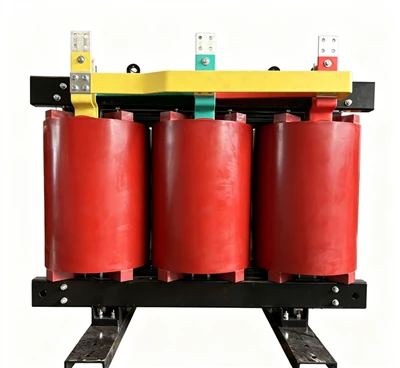
If you’ve ever stood inside a power substation, data center, or industrial manufacturing plant, chances are you’ve seen a dry type transformer—its boxy, ventilated frame, smooth epoxy-coated windings, and quiet hum standing like a reliable workhorse that keeps operations running. For 12 years, my team and I have supplied and serviced dry type transformers across North America, and one question we get more than any other from our clients is this: Can I retrofit my existing dry type transformer instead of replacing it?
It’s a logical question. New transformers represent a huge capital expense—we’re talking six- and seven-figure price tags, plus installation, downtime, and regulatory paperwork. When your transformer is still performing, just not at the level you need, retrofitting feels like a smart, cost-saving middle ground. But over the years, I’ve learned that the answer isn’t a simple yes or no. It depends on why you want to retrofit, what your transformer is actually capable of, and whether the modification makes sense from a technical and business standpoint. Let’s break this down, from the common retrofit requests we see, the technical hurdles, and when retrofitting is worth the investment (and when it’s not).
First, let’s get clear on what a retrofit for a dry type transformer actually is, because a lot of people mix it up with a repair. A repair is fixing a broken part—replacing a worn fan, tightening a loose connection, patching a small crack in the epoxy coating. A retrofit, on the other hand, is a permanent, performance-altering modification to an existing unit to change its capabilities. The most common retrofit requests we get fall into three main categories: boosting capacity, updating voltage ratings, and improving efficiency or safety.
Take capacity upgrades, for example. A food processing plant we worked with two years ago came to us because they’d expanded their production line, adding new mixers, ovens, and refrigeration units that put a 15% load increase on their 2,000 kVA dry type transformer. Their original unit was rated for 2,000 kVA at 55°C rise, and the manufacturer had built in a 10% overload buffer as standard. Instead of buying a new 2,300 kVA unit, they asked if we could retrofit their existing one to handle 2,500 kVA. That’s a clear case where retrofit made sense—at first glance.
But here’s the catch with capacity retrofits: you can’t just cram more power into an old unit without checking the fundamentals. Dry type transformers have three core components that determine their maximum load: the windings (copper or aluminum wires that carry current), the insulation system (the epoxy coating and inter-winding barriers that prevent short circuits), and the cooling system (fans, ventilated housing, and the airflow design that keeps temperatures from spiking).
For that food plant, we ran a full diagnostic on their unit first. We pulled the manufacturing specs from our archives—turns out their transformer was a mid-2010s model with a Class 220 insulation system, which is designed to handle 220°C maximum hot-spot temperature. The original 55°C rise rating meant that at full load, the hot spot would hit 175°C, leaving a 45°C buffer before insulation failure. The 2,500 kVA load they needed would only push the hot spot to 192°C, which was still well within the 220°C limit. Their cooling system was also oversized for their original load, so the fans and ventilation could handle the extra heat without modification. We swapped out the low-voltage bushings (which were rated for their original current) for higher-amperage units, updated the internal wiring connections to handle the higher load, and tested the unit to confirm it could safely hit 2,500 kVA. The whole retrofit cost them 40% of what a new transformer would have, and we had it installed over a single weekend with just four hours of downtime—way less than the 10 days we would have needed for a new unit. That’s the sweet spot of retrofitting.
Another common request we see is voltage adjustment. A data center in Austin, Texas, reached out last year because they expanded their server farm and needed to shift their transformer’s primary voltage from 12,470V to 13,200V to match their new utility feed. The alternative was replacing the transformer, which would have required reworking all their internal electrical panels and retagging all their equipment to match the new voltage. We looked at their unit: it was a 1,500 kVA outdoor dry type transformer, rated for dual primary voltages, a design many manufacturers use to accommodate utility grid fluctuations. We just had to reconfigure the winding taps—those external connections that adjust the number of active windings—and recertify the unit for the new voltage rating. Again, that retrofit saved them nearly 50% compared to replacement, and we did it without touching their panel schedule.
But not all retrofit requests are this straightforward. Last year, a manufacturing plant with a 10-year-old dry type transformer asked us to retrofit it from an indoor unit rated for general purpose to an explosion-proof unit, because they were moving a production line to a zone where flammable dust is present. When we did the assessment, we found two big problems. First, their original transformer’s enclosure wasn’t sealed to meet explosion-proof standards—dry type transformers rely on airflow for cooling, so sealing it tight would cause it to overheat even at full load, because the heat can’t escape. Second, the insulation system in their unit wasn’t rated for the higher ambient temperatures that come with explosion-proof enclosures, and modifying it would require re-winding the entire core—something that was almost as expensive as buying a new unit. We explained that retrofitting wasn’t feasible here, and the client ended up going with a purpose-built explosion-proof transformer from our inventory. That’s the key: retrofitting works only when the core components (insulation, cooling, winding design) can support the new requirement.
I think the biggest misconception people have about retrofitting dry type transformers is that it’s a quick, cheap fix for any problem. Over our 12 years, we’ve seen clients waste tens of thousands of dollars on half-hearted retrofits that don’t meet code, or cause premature transformer failure down the line. Let’s talk about code, because this is non-negotiable. Dry type transformers are regulated by OSHA, NFPA 70 (the National Electrical Code), and local utility standards, depending on where they’re installed. Any retrofit has to be certified to meet these standards, which means working with a manufacturer or a service provider that has the testing equipment and expertise to verify compliance. A few years ago, a small industrial client tried to retrofit their transformer on their own, adding extra cooling fans to boost capacity, but didn’t get a certification test. The unit failed six months later, causing a 3-day shutdown that cost them over $200,000 in lost production. When we tested the unit, we found that the extra fans had created uneven airflow, leading to hot spots that damaged the windings. That’s why proper testing isn’t a luxury—it’s a requirement.
So, when is retrofitting a dry type transformer actually a good idea? Let’s outline the scenarios where it makes sense, based on what we’ve learned over thousands of service calls:
First, when the change is within the original design limits. That’s the case for most capacity and voltage adjustment retrofits. If your transformer’s insulation, cooling, and winding specs have enough buffer to support the new load or voltage, retrofitting is a no-brainer. It’s faster, cheaper, and less disruptive than replacement.
Second, when you need to update safety or efficiency features that are compatible with your existing unit. For example, adding a remote monitoring system to track temperature, load, and vibration—something we’ve retrofitted on hundreds of units over the years. Older transformers don’t have built-in sensors, so adding them is a simple retrofit that improves reliability without major changes to the core unit. Or upgrading from a standard epoxy coating to a heat-resistant, UV-stabilized coating for outdoor units—this is a common retrofit for clients whose transformers are exposed to harsh weather, and it extends the unit’s lifespan by 10+ years, often for a fraction of the cost of a new unit.
Third, when downtime is a critical factor. We’ve done retrofits that take 2-3 days, compared to new unit installations that take 1-2 weeks, because new units require custom fabrication, factory testing, and on-site commissioning. For clients like data centers or 24/7 manufacturing plants, every hour of downtime costs thousands of dollars, so the faster turnaround of a retrofit is worth the slightly higher per-hour cost of the service.
But when should you skip retrofitting and replace your transformer instead? These are the scenarios we flag to our clients early, to avoid wasting their time and money:
If your transformer’s core components are at the end of their service life. Dry type transformers typically last 25-30 years, but if your unit is over 20 years old, and its insulation is damaged (from overheating, moisture, or physical damage), retrofitting won’t fix the underlying wear. Replacing it will be more reliable and cost-effective in the long run. We had a client with a 27-year-old unit that they tried to retrofit to add 30% capacity—we found the insulation was cracked and had lost 30% of its dielectric strength, so even after retrofitting, the unit would only last 2-3 more years. Replacing it was the only viable option, and we saved them from a costly premature failure.
If the retrofit would require major rework of the core components. That explosion-proof unit I mentioned earlier? The cost to rework the enclosure and insulation would have been 80% of a new unit, with no guarantee of compliance. Another example: if you need to change a transformer from a distribution unit to a power unit, which requires completely rewinding the core. That’s a bigger project than most clients realize, and it’s almost always cheaper to buy new.
If the retrofit doesn’t comply with local codes or utility requirements. Every region has different rules for transformer installations, especially for commercial or industrial sites. A few years ago, we worked with a client in California who wanted to retrofit their unit to operate at a higher efficiency to meet new state energy codes. We ran the numbers: modifying the windings to reach the new efficiency standard would have cost $25,000, while a new high-efficiency unit was $30,000. The retrofit would have also required additional insulation upgrades to meet fire codes, bringing the total cost to $45,000. The new unit came with a 10-year warranty, while the retrofit would have only had a 1-year warranty. That was a clear win for replacement.
Over the years, we’ve refined our process for evaluating retrofit requests, to make sure we’re giving our clients accurate, honest advice. It starts with a full diagnostic: we test the unit’s insulation resistance, hot-spot temperature, winding resistance, and cooling system performance, and pull the original manufacturing specs to see what buffers are available. We then compare the client’s needs (load, voltage, safety requirements) to those specs, and run a cost-benefit analysis that includes not just the upfront cost, but downtime, warranty, and long-term reliability. We always present two options: retrofit if it’s feasible, or replacement if it’s the better choice. That’s how we build trust—we don’t pressure clients to choose one or the other; we give them the data to make the best decision for their business.
I want to close with a note that comes from 12 years in this business: transformers are long-term investments, and the best decision isn’t always the cheapest upfront. Retrofit works when it aligns with your unit’s capabilities and your needs, but it’s not a one-size-fits-all solution. If you’re asking yourself whether your dry type transformer can be retrofitted, the first step is to reach out to a reputable supplier or service provider that knows dry type units inside and out. Don’t rely on online tutorials or general electricians who work with every type of equipment—dry type transformers have unique specifications, and modifying them incorrectly can lead to safety hazards or costly failures.
If you’re considering a retrofit, or want to learn more about the condition of your current transformer, our team is here to help. We offer free, no-obligation diagnostic assessments, and we’ll walk you through every step of the process, from testing to final certification.
Box Type Substation References
- National Fire Protection Association. NFPA 70: National Electrical Code, Article 450. 2023.
- Institute of Electrical and Electronics Engineers. IEEE C57.12.00: Standard for General Requirements for Liquid-Immersed Distribution, Power, and Regulating Transformers. 2020.
- International Electrotechnical Commission. IEC 60076-11: Power Transformers – Part 11: Dry-Type Transformers. 2019.
- Dry Type Transformer Association. Retrofit Guidelines for Dry-Type Transformer Modifications. 2022.
Jiangsu Yuantong Electric Co., Ltd.
As one of the most professional dry type transformer manufacturers and suppliers in China, we also support customized service. We warmly welcome you to wholesale bulk dry type transformer for sale here from our factory. For more information, contact us now.
Address: No.68 Xiyuan Avenue, Hai’an Industrial Park, Hai’an City, Jiangsu Province, China
E-mail: aaron@jsytelectric.com
WebSite: https://www.yuantongtransformer.com/
