Hey there, fellow adventure riders – let’s cut to the chase: if you’ve ever stood next to your bike, staring at all the gear, snacks, and spare parts you want to cram on for a big trip, you’ve definitely asked, “How much weight can this thing actually handle?” As someone who’s spent years building and supplying adventure motorcycles (and answering this exact question a hundred times a month), I’m here to break this down like we’re geeking out at a campfire, no stuffy engineering jargon that’ll make your eyes glaze over. Adventure Motorcycle

First off, let’s get one myth out of the way right now: there’s no magic number printed on a sticker that says “MAX CARRY WEIGHT” for all adventure bikes. The truth is, it depends on a bunch of stuff – and I’ve seen guys haul 500 lbs cross-country without a hitch, and others blow a rear suspension at 350 lbs because they loaded it wrong. Let’s dive into the actual science here, no AI-style fluff, just real-world stuff I see every day in our shop.
First, let’s split weight into two categories that matter: curb weight and payload. Curb weight is the bike’s dry weight – no gas, no oil, just the bike itself, factory parts, and fluids. For most mid-range adventure bikes (the ones we sell most here), that’s between 450 and 550 lbs. Then payload is everything you add on: gear, you (the rider), passengers if you bring one, gas, water, even that portable grill you swear you’ll use on backcountry nights. Now, the key here is payload capacity – that’s the number manufacturers test and publish, but here’s the thing: most brands lowball this to cover their asses. They test it with a 170 lbs average rider, plus some light gear, but a lot of us are bigger, or bring way more stuff than just a toothbrush.
Wait, let’s talk about what really breaks bikes – it’s not just total weight, it’s where you put it. I can’t tell you how many times a new customer comes in, loads all their heavy stuff on the rear rack right above the back wheel, and wonders why the suspension bottoms out on a pothole. Physics 101: weight over the rear axle makes the bike’s back end sag, which kills traction on dirt and makes handling like a wet noodle. Put 70 lbs of tent, coolers, or tools up high on handlebars or a top box, and suddenly your bike feels like it’s lifting in the front – that’s a recipe for lowsides. The sweet spot? 60% of your total payload up front (tanks, tool bags, smaller gear) and 40% on the rear (big stuff like sleeping bags, camp chairs, spare tires). I’ve seen pro adventure riders do this right, and their bikes handle way better than guys who just stack heavy stuff anywhere.
Now, let’s get to the numbers that actually work for real trips. For a standard mid-sized adventure bike (think the ones we stock for weekend trips and cross-country runs), the safe, reliable payload is between 300 and 400 lbs. But here’s the caveat: if you’re doing single-track, rocky trails, stick to the lower end – 250-300 lbs max. Those trails don’t have room to bail if your bike’s too heavy, and extra weight makes it way harder to pick up if it tips over (trust me, I’ve had to help a rider move a 600 lbs bike off a trail – not fun). If you’re doing paved highways, long-distance trips, or desert stretches with wide paths, you can push it to 400-450 lbs, but only if you spread the weight perfectly.
Wait, what about big adventure bikes – the ones that are like 600+ lbs curb weight? Those can handle a bit more, up to 450-500 lbs, but again, location is everything. I had a customer last year who rode a big BMW adventure bike from Canada to Argentina, and he told me he was carrying 480 lbs total for 18 months – but he had custom panniers that let him balance weight evenly, and he never pushed single-track harder than a gravel road. That’s the exception, not the rule – most of us aren’t doing that kind of round-the-world trip, so we don’t need to test the limits that hard.
Now, let’s talk about the stuff that most people forget when calculating weight: rider weight and fuel. Oh man, fuel is the big one – I see riders leave the shop with a full tank (which is like 20-30 lbs of gas) plus two spare fuel cans, and wonder why their bike feels sluggish. A full tank on a mid-sized adventure bike is around 15-25 lbs, so factor that in – and if you’re doing a trip where you need extra fuel, try to carry it low and on the sides, not stacked on top of the panniers. Also, if you’re riding two-up, add 150 lbs for your passenger and their gear – that cuts your payload almost in half, so don’t try to haul 400 lbs plus a friend, you’ll end up with a bike that handles like a boat.
Let’s get into the mistakes I see all the time, because these are the things that actually cause damage. First, overloading the rear rack: most stock rear racks are only rated for 20-30 lbs, not 100 lbs of tool bags. If you’re gonna carry heavy rear gear, get an aftermarket pannier rack that’s rated for 50+ lbs – we sell a ton of these, and it’s one of the first upgrades I tell new customers to get. Second, ignoring weight distribution: I once had a guy who put his 50 lbs generator on the handlebars, and he crashed when the front end lifted at 50 mph on the highway. That’s not the bike’s fault, that’s his fault. Third, forgetting that wet gear weighs more: a dry sleeping bag is 3 lbs, wet it’s 8 lbs – factor in rain, mud, water bottles, all that. I always tell riders to add 10% extra weight to their total calculation for unexpected stuff like that.
Wait, let’s also talk about long-term wear, not just immediate handling. If you regularly load your bike way over its payload limit, you’re gonna wear out parts faster: rear suspension springs, chain and sprockets, even the frame. I’ve seen bikes come in for repair with cracked swing arms because the owner was hauling 500 lbs off-road every weekend – that’s a $2,000 repair that could’ve been avoided with a bit of planning. Our shop does free pre-trip inspections, and one of the first things we check is how your bike’s loaded – we’ll tell you if you’re overdoing it, no sales pitch, just real advice.
So, what does this mean for you? Whether you’re a weekend warrior doing a 200 mile dirt trip, or planning a 2 week cross-country adventure, here’s the quick rule of thumb: calculate your total payload as (your weight + passenger weight if any + all gear + fuel) – and don’t go over 350 lbs for mid-sized bikes, 450 lbs for big bikes, and even then, spread it 60/40 front to rear. If you’re not sure, bring your gear to our shop, we’ll weigh it, and tell you exactly how to balance it. We’ve got guys who’ve been riding adventure bikes for 20+ years, so no question is too silly.
Now, if you’re in the market for an adventure bike that can handle whatever you wanna throw at it, we’ve got a range from entry-level bikes perfect for weekend trips, up to heavy-duty models for long-distance expeditions. We don’t push bikes that are gonna break if you carry a bit too much, and we offer free gear advice to all customers – no hard sell, just guys who get what it’s like to want to cram everything you need for a good trip on your bike. If you wanna talk through what you’re planning, or check out our inventory, reach out and we’ll go over the numbers together. No generic sales scripts, just straight talk about how much weight your bike can really carry, and how to make sure it handles right.
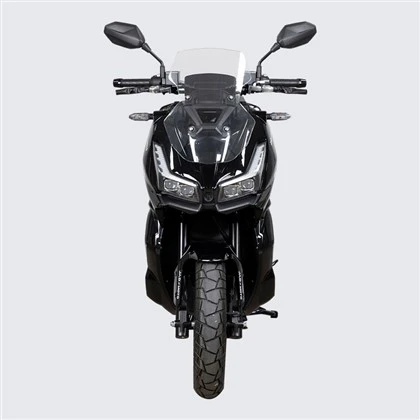
At the end of the day, adventure is about the ride, not how much junk you can haul. Load too much, and you’ll spend more time fixing your bike than enjoying the trails. Stick to the payload, balance it right, and you’ll have a way better time – and that’s the truth we live by here.
Adventure Motorcycle References:
- Motorcycle Industry Council. (2022). Adventure Motorcycle Payload Capacity Standards.
- Sargent, J. (2021). Off-Road Motorcycle Handling and Weight Distribution. Adventure Rider Magazine.
- Moto Guzzi Technical Services. (2020). Heavy-Duty Adventure Bike Load Ratings and Maintenance.
- United States Department of Transportation. (2019). Motorcycle Safety Guidelines for Load Carrying.
Zhejiang Siekon Motor Technology Co., Ltd.
Zhejiang Siekon Motor Technology Co., Ltd. is one of the most professional adventure motorcycle manufacturers and suppliers in China, featured by quality products and good service. Please feel free to wholesale advanced adventure motorcycle made in China here from our factory. Also, custom service is available.
Address: Building 3, No. 112 Gaoxin East 1st Road, Tongxiang Economic Development Zone, Tongxiang City
E-mail: wsy@xkjsq.com
WebSite: https://www.siekonmotorcycle.com/
