If you’re in the market for positive displacement pumps, chances are you’ve come across screw pumps—those quiet, reliable workhorses that move everything from fuel and lubricants to food-grade liquids and industrial slurries. But if you’ve ever found yourself asking, “What’s the right speed range for a screw pump?” you’re not alone. As a screw pump supplier who’s been fielding these questions from maintenance managers, process engineers, and plant operators for over a decade, I can tell you this is one of the most common (and most important) questions we get. Too fast, and you risk premature wear, inefficient operation, or even pump failure. Too slow, and you’re leaving performance on the table, possibly dealing with inconsistent flow or liquid separation. Today, I want to break down the science behind screw pump speed, explain why the range isn’t one-size-fits-all, and share what we teach customers when they’re sizing their next unit. Screw Pump
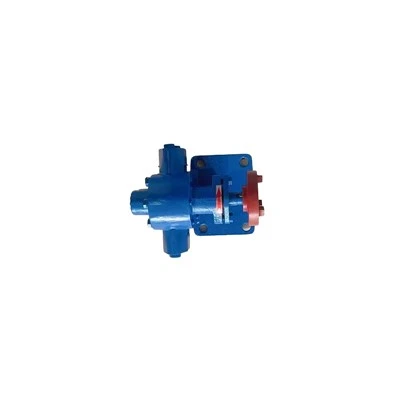
First, let’s start with the basics for anyone new to screw pumps. Unlike centrifugal pumps that use an impeller to fling liquid, screw pumps use intermeshing screws (usually a drive screw and one or two driven screws) that rotate in a sealed casing. As the screws turn, they create a series of fixed, moving cavities that trap and carry liquid from the suction side to the discharge side. That positive displacement design is why screw pumps are so good at handling viscous, delicate, or shear-sensitive fluids—they move liquid gently and deliver consistent flow regardless of changes in pressure. But that same design is what makes speed so critical to their performance and longevity.
Speed for screw pumps is measured in revolutions per minute (RPM), and the range is usually split into two main categories: low-speed and high-speed. But here’s the thing—there’s no universal number that works for every application. The right RPM depends on three key factors: the viscosity of the fluid you’re pumping, the pressure differential across the pump, and the type of screw pump you’re using (single-screw, twin-screw, or triple-screw). Let’s dive into each of these, because that’s where the real science happens.
Let’s start with viscosity, because that’s the single biggest driver of screw pump speed. Viscosity is a fluid’s resistance to flow—think of water (low viscosity, ~1 cP) vs. heavy crude oil (high viscosity, ~10,000 cP or more). Screw pumps work by moving liquid in those screw cavities, and the faster the screws turn, the more shear force is applied to the fluid. For low-viscosity fluids like water, gasoline, or light solvents, we typically recommend running the pump at the higher end of its speed range—usually 1,000 to 1,800 RPM. Why? Because low-viscosity fluids move easily through the screw cavities, and higher RPM boosts flow rate without adding unnecessary stress. But if you try to run a high-viscosity fluid at that same speed, that’s when problems start. A thick fluid like molasses or industrial grease can’t flow fast enough into the cavities at high RPM, leading to cavitation (when vapor bubbles form and collapse inside the pump, damaging screws and casings) or increased friction that overheats the fluid and wears out the pump’s components. For high-viscosity fluids (anything above 1,000 cP), we drop the speed to 100 to 600 RPM. I remember a customer a few years back who tried to run a twin-screw pump at 1,500 RPM for pumping heavy lube oil and ended up burning out the drive screw in three months. He didn’t realize that high viscosity requires slower speeds to maintain proper lubrication between the screw and casing, and to prevent excess heat buildup. That’s a mistake we work hard to help customers avoid.
Next up is pressure differential—the difference between the suction pressure at the pump inlet and the discharge pressure at the outlet. Screw pumps are designed to handle different pressure ranges, and how much pressure you’re pushing the fluid through directly impacts the safe speed. If you’re moving fluid against a high pressure (say, 100 PSI or more, common in hydraulic systems or high-pressure injection applications), you need to run the pump at a lower RPM. Why? At higher pressure, the forces pushing against the rotating screws are greater. Running too fast creates more load on the drive shaft, seals, and bearings, leading to shorter service life. For low-pressure applications (like moving water to a storage tank, or transferring mild chemicals), you can safely crank up the RPM to maximize flow rate and efficiency. Let’s take an example: a triple-screw pump we supplied for a food and beverage plant uses it to pump edible oil from a processing tank to a filling line at 50 PSI differential. We sized it for 1,200 RPM, which gives it the exact flow rate they need without straining the components. But another triple-screw pump we sent to a petrochemical plant is used to pump crude oil through a pipeline at 800 PSI differential—we had to set it to 250 RPM, because any faster would cause the pump’s mechanical seals to leak prematurely. That’s a perfect example of how pressure changes the speed rule.
The third factor is the type of screw pump itself. Screw pumps aren’t all the same, and their speed ranges vary by design. Single-screw pumps (also called progressing cavity pumps) use one single rotor screw that rotates inside a rubber stator. These pumps tend to run on the lower end of the RPM scale, usually 50 to 600 RPM. The rubber stator is a soft component, so high RPM would cause excessive wear and tear, and even tear the rubber over time. They’re ideal for shear-sensitive fluids like yogurt, fruit purees, or polymers, where gentle handling is key. Twin-screw pumps, on the other hand, have two intermeshing metal screws and run a bit higher—typically 300 to 1,500 RPM. They’re good for both low and high viscosity fluids, and often used in marine applications, oil and gas, and wastewater. Triple-screw pumps, with three precision-machined metal screws, can run even faster, from 500 to 3,600 RPM. They’re designed for high-flow, low-viscosity applications like hydraulic systems, lubrication systems, and fuel transfer, where efficiency and high flow are priorities. I always tell customers to match the pump type to their application first, because that sets the baseline speed range before you even adjust for viscosity and pressure.
Now, you might be wondering—what happens if I stray from these ranges? Let’s talk about the risks, because they’re not trivial. If you run a screw pump too fast for your fluid or pressure, you’ll likely see: increased wear on screws, seals, and bearings; overheating of the fluid, which can degrade sensitive products (like food or pharmaceuticals) or cause viscosity changes; cavitation and noise; and higher energy consumption, because the pump is working inefficiently. If you run it too slow, you might get inconsistent flow, especially with high-viscosity fluids that can settle or separate if the pump isn’t moving them enough. In some cases, too slow can lead to liquid sitting in the pump, causing contamination or even solidification of the fluid (like heavy crude) that seizes the pump.
I should also mention that modern screw pumps often use variable frequency drives (VFDs) to adjust speed on the fly. That’s a game-changer for many of our customers, because it lets them fine-tune RPM based on real-time conditions. For example, a chemical plant might use a VFD to slow the pump down when viscosity fluctuates (like in cold weather, when oil gets thicker) or speed it up when they need higher flow. But even with a VFD, there’s a safe operating range—you can’t just crank it to 10,000 RPM and expect it to work. We always provide a recommended speed range with every pump we sell, and we work with customers to adjust that range based on their specific operational needs.
Let me share another example from our recent work. A customer in the pharmaceutical industry needed a pump to inject a sterile antibiotic solution into a production line. The fluid was low viscosity (similar to water), and they needed a precise, consistent flow to avoid product waste. We recommended a triple-screw pump with a VFD, set to run between 1,000 and 1,400 RPM. That range gave them the flow accuracy they needed, and since it was low pressure (only 30 PSI differential), they didn’t have to worry about component wear. When they first installed it, they tried running it at 1,600 RPM to speed up production, but the solution started to foam (from the higher shear) and contaminated a batch of product. We worked with them to adjust the speed back to the recommended range, and they’ve had zero issues in the year since.
So, to wrap up the basics: there’s no single speed range for screw pumps, but a general guideline is: low viscosity (<1,000 cP) = 500–3,600 RPM, medium viscosity (1,000–10,000 cP) = 200–1,000 RPM, high viscosity (>10,000 cP) = 50–600 RPM. But always factor in pressure and pump type—high pressure means lower speed, soft stators (single-screw pumps) mean lower speed, and precision metal screws (triple-screw) can handle higher speed.
If you’re still not sure what speed range is right for your application, that’s where we come in. As a screw pump supplier with decades of experience, we don’t just sell pumps—we help you find the right pump for your needs, and that includes getting the speed right. We take the time to ask about your fluid type, viscosity, required flow rate, pressure requirements, and any special considerations (like shear sensitivity or sanitary standards) to make sure you get a pump that runs at the optimal speed for your operation. A pump running at the correct speed is more efficient, lasts longer, and saves you money on maintenance and energy costs.
Don’t let guesswork lead to pump failures or wasted product. If you’re in the market for a screw pump, or if you’re looking to replace an old one and want to optimize its speed for better performance, get in touch to discuss your needs. We’re here to answer your questions, walk you through our product options, and help you find the perfect solution for your application.
Gear Pump References:
- Karassik, I. J., Messina, J. P., Cooper, P., & Heald, C. C. (Eds.). Pump Handbook, 4th Edition. McGraw-Hill Professional.
- Valiron, J. (2000). Screw Pumps: Design, Operation, and Applications. Journal of Fluids Engineering, 122(3), 587–594.
- American Petroleum Institute. (2020). API Standard 676: Rotary Positive Displacement Pumps. API Publishing Services.
- Food and Agriculture Organization of the United Nations. (2018). Pump Selection and Operation for Food Processing Applications. FAO Agricultural Engineering Bulletin.
Botou Hengyang Pump & Valve Co., Ltd.
With abundant experience, we are one of the most professional screw pump manufacturers and suppliers in China. Please feel free to buy high standard screw pump made in China here and get pricelist from our factory. All customized pumps are with high quality and competitive price.
Address: No. 159, Road 1, Development Zone, Botou City, Cangzhou, Hebei Province, China
E-mail: bthdbf@163.com
WebSite: https://www.hyoilp.com/
